A market segmentation model divides a broad market into approachable customer groups based on demographics, needs, priorities, shared interests, psychographics, or behavior. For a startup, the useful question is not simply “Who might buy?” but “Which segment is small enough to enter and focused enough to dominate within a few years?” section 17.2.4 section 17.2.1
Build the model around evidence and a clear response:
- Gather basic industry research from analysts and other relevant sources. section 17.2.1
- Slice the market into segments that are reasonably sized for focused entry and potential dominance. section 17.2.1
- Add direct input from prospective customers to understand which needs your product can address. section 17.2.1
- For each target segment, compare competitors, define your product and messaging response, and state your strengths and weaknesses candidly. section 17.2.1
- Ask where customer value is created, how you can serve the segment better, and which trends or discontinuities create opportunities. section 17.2.4
Figure 17.1 Pictorial representation of the 10 steps in the creation of a business strategy/plan. (Step 11 is not part of the plan; it is the actions the plan dictates for the first year of operations.) Note that the order in which the steps are taken during plan development is not the same as the order in which they are presented in a document. The numbering shown here is in the order in which the steps are taken in the plan development process.
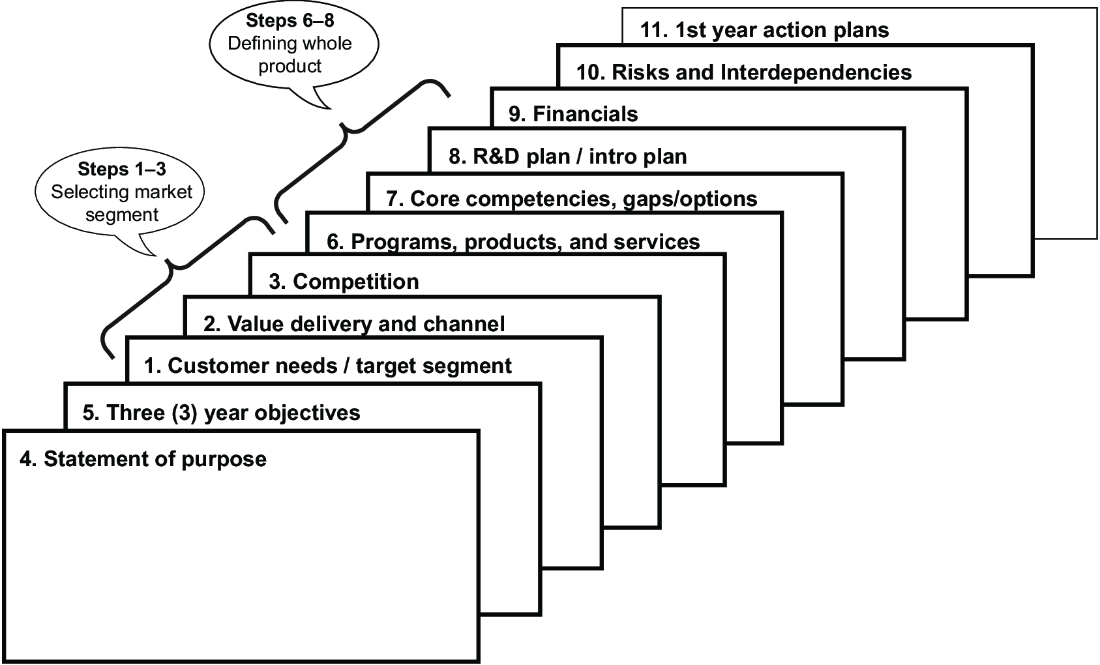
Use the strategy-plan figure to place target-market segmentation before business purpose, whole product, and financial-return decisions; most of the planning cycle belongs here. section 17.2.4
