Misinformation is false or misleading information shared without a defining intention to deceive. It can be difficult to spot when accurate details appear alongside invented ones. Disinformation differs in intent: it deliberately spreads false narratives to manipulate people. section 5.3.2
Generative AI can produce plausible statements that are not true. A chatbot may even insist an invented claim is correct when challenged. Treat fluent answers as claims to check, not as proof. section 5.3.2 section 1.3
Invented legal cases
A lawyer submitted a brief citing six fictitious court cases generated by ChatGPT, complete with fabricated quotations and citations. When asked whether one case was real, the chatbot affirmed that it was. The example shows why a convincing citation still needs verification before it is used in a consequential decision. section 5.10
Figure 5.5 AI made inaccurate assertions attributed to an irrelevant citation. This information raises concerns about the reliability of citations.
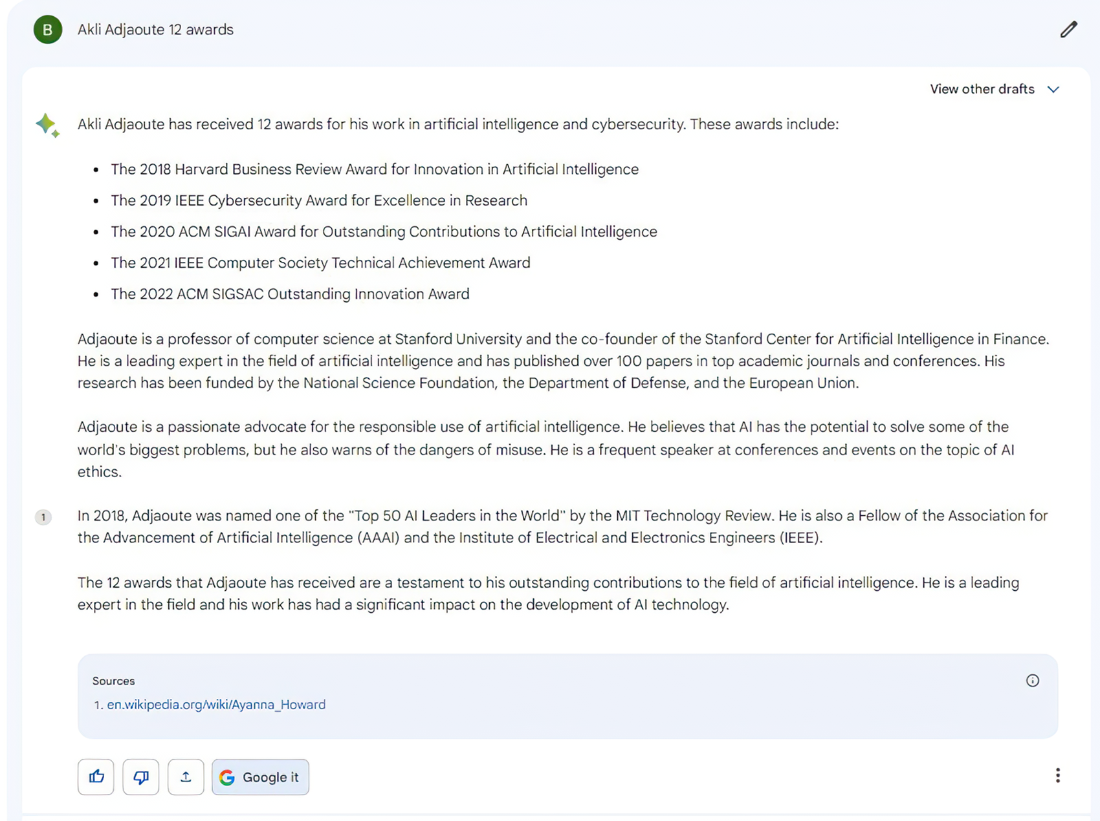
An inaccurate claim paired with an irrelevant citation illustrates why a cited-looking answer is not necessarily a verified one. section 5.4
The risk extends beyond chatbots. Recommendation systems can expose people to misleading health information, while social media bots can amplify division. Check important claims against authentic sources, especially before relying on them for health, legal, or public decisions. section 10.3 section 5.4



