A modernization initiative updates an established product when its current technology, design, maintenance cost, compatibility, or business fit no longer supports what the organization needs. The product may still be widely used and functional; modernization is not a claim that existing users were doing something wrong. It is a deliberate effort to preserve useful capabilities while making change easier and improving the product’s fit with current expectations. section 1.1 section 1.4
Start with the business reason, not the replacement technology. Common triggers include an acquired product that misses design guidelines, regulatory or compliance scrutiny, repositioning for a new audience, and costly hardware or software dependencies. In a payment-dashboard initiative, competitive pressure also comes from customers requesting better capabilities, such as transaction analytics, fraud monitoring, and support for customers who originate transactions. section 1.1 section 1.4
Treat modernization as a combined product, technical, and operational effort:
- Respect existing workflows. Users may know the current system’s processes and idiosyncrasies well, so changes should consider how customers will adapt rather than focusing only on design and development. section 1.4
- Make limitations concrete. A legacy payment interface may delay processing by requiring operations to upload files before back-office selection, provide only file-total reporting, rely on a reporting-limited legacy database, or impose constrained access. section 1.4
- Connect technical debt to measurable business effects. A mainframe system that is tightly coupled to its architecture can become hard to maintain; increasing code size and complexity can lengthen regulatory enhancements and bug fixes. section 2.1
- Use delivery metrics to establish urgency and later judge progress: release cadence, defect backlog, escaped defects, and customer satisfaction expose the cost of slow or risky change. section 2.1
- Investigate before converting. An exploration or research spike can give a team experience with Python and the ACH file layout while it gains enough insight into COBOL behavior to move functionality safely. section 2.1
Modernizing an ACH dashboard
An ACH dashboard begins as a utility-like internal task but becomes a modernization initiative when business needs expand. The target is not merely a refreshed screen: it includes faster file handling, meaningful reporting, improved analytics, fraud monitoring, and a look and feel consistent with other products. Delivering it also spans database design, APIs, backend processing, and a user interface, showing why modernization crosses system layers. section 1.4 section 1.1
Figure 1.5 Legacy ACH Interface
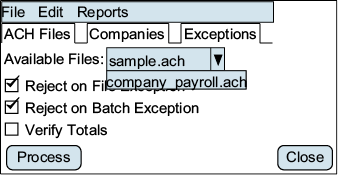
Compare the legacy ACH interface with the stated operational limitations to identify which friction points a modernization effort must address. section 1.4
Figure 1.6 Modern ACH dashboard
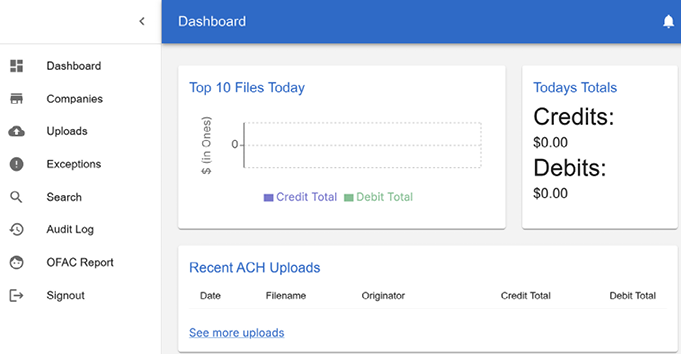
Use the modern dashboard view as a reference for the intended product direction: expanded capability and consistency with the wider product set. section 1.4
Generative AI can be evaluated as part of the initiative, but its role is exploratory: the team is given early access to assess whether the tools improve productivity while it learns the payment format and existing implementation. Tool output needs evaluation alongside domain understanding, legacy-code investigation, and the business measures that motivated the work. section 2.1



