Monolithic architecture keeps major application functionality in one tightly integrated unit: one application, one codebase, and a shared deployment boundary. That shape can support clean internal boundaries, but it becomes restrictive when different parts of the product need independent builds or release schedules. section 6.5
Ghost’s nine-year monolith
Ghost’s original layout placed its Node.js server in core/ and user data plus the Casper theme in content/. The arrangement matched a one-application mental model and lasted nine years. It was reorganized into a monorepo when Portal, Admin-X-Settings, and Comments-UI required separate React builds and independent shipping schedules. The change was not merely repository cleanup: Ghost had become a core API with several frontends. section 6.5
Inspect a suspected monolith by making its shape and control boundaries explicit:
- Inventory what the configuration names, then verify each connection in code; configuration is a hint, not proof that a dependency is live. section 9.3
- Classify each component as CLIENT, RUN, RENT, or CALL according to who wrote and operates it; the band identifies whether failure calls for editing, reconfiguration, retrying, or routing around. section 9.3
- Write a shape verdict, list nodes with stable IDs and downstream edges, and render synchronous and asynchronous paths in a Mermaid flowchart. section 9.3
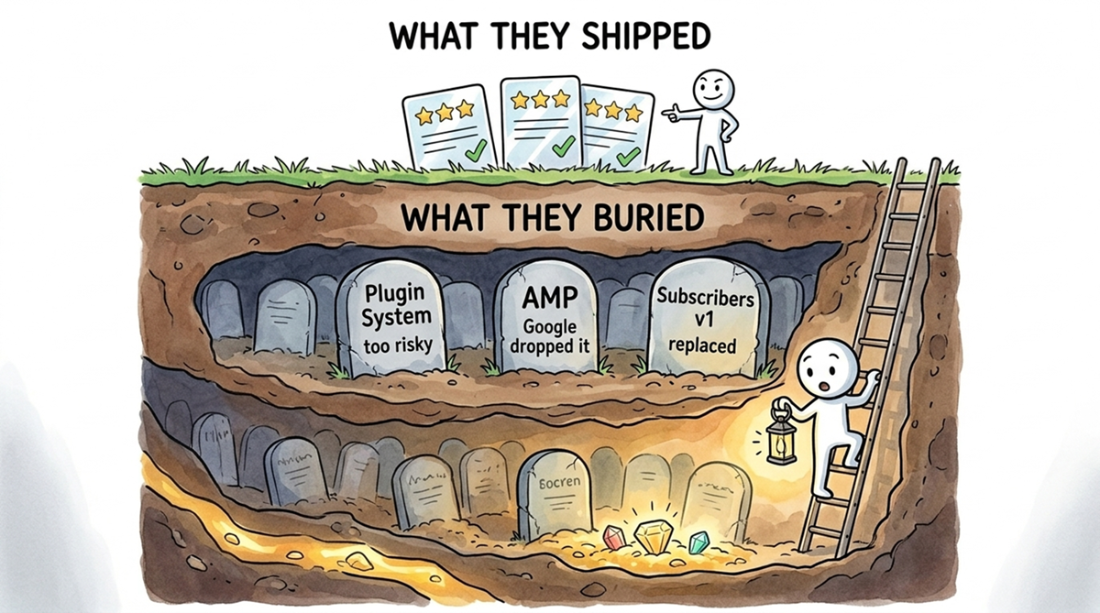
Figure 6.7 A project advertises what shipped, but its git history also records what was killed. These deletions (a plugin system that never found an audience, an AMP integration Google abandoned, a replaced subscribers v1) show which bets the team walked away from.
Use the timeline to compare the original one-application shape with the later architecture and see which product assumptions the transition invalidated. section 6.5












