In de novo drug design, multi-objective optimization uses rewards from property-prediction models to balance several candidate qualities rather than maximizing potency alone. section 13.3.1
For TNIK candidate generation, the reward balances:
- Predicted binding affinity, weighted heavily. section 13.3.1
- Kinase selectivity, solubility, CYP inhibition, and synthetic accessibility. section 13.3.1
Adjusting the balance
Early runs favored TNIK affinity but produced candidates with poor solubility or synthesis feasibility. Later runs gave drug-like properties more weight, trading some predicted potency for better overall profiles; medicinal chemists guided the adjustments. section 13.3.1
Figure 13.7 The four stages of the rentosertib program. Multi-omics data and literature flow through PandaOmics to a scored target list; Chemistry42 generates and optimizes candidates against a multi-objective reward; experimental readouts feed back to refine the models; clinical development follows. Sections 13.3.1 through 13.3.4 walk through each stage.
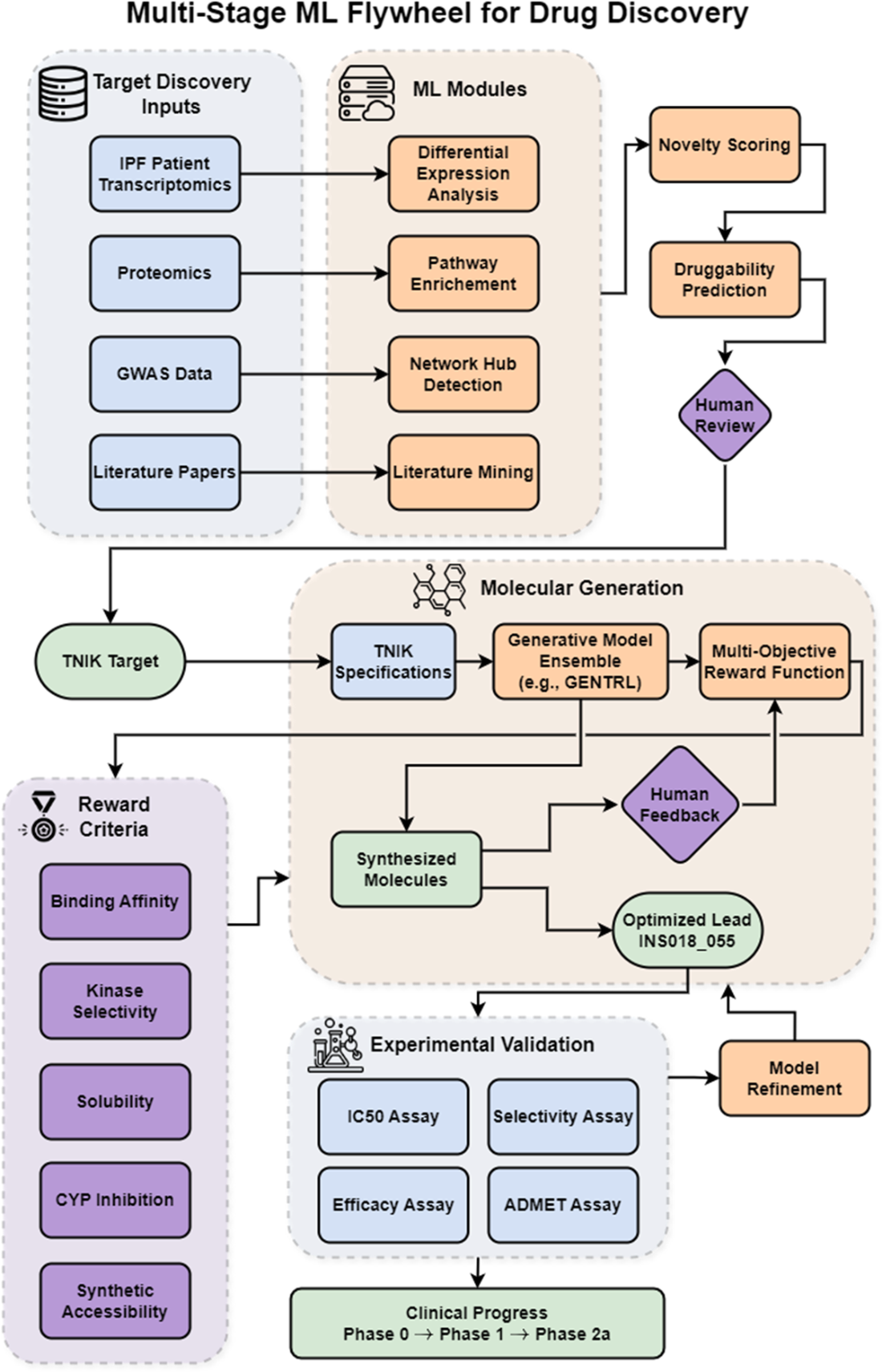
See where multi-objective rewards fit in the broader cycle from target selection through candidate testing and clinical development. section 13.3.1

