Network access control (NAC) regulates which users and devices may connect to an organization’s network. It helps limit exposure from unauthorized users and devices that are untrusted or compromised. section 12.5.4
When a device attempts to connect, NAC checks the user’s identity and evaluates the device against security policies. Checks can include antivirus status, operating-system patches, and risky software. Compliant devices receive access; others may be denied or placed in a limited quarantine segment until they meet requirements. section 12.5.4
NAC supports practical network security by:
- Managing access in environments with personal devices or many IoT devices. section 12.5.4
- Giving administrators visibility into connected devices and allowing access to change based on risk or behavior. section 12.5.4
- Isolating a noncompliant or suspicious device and directing it toward remediation, such as installing patches or enabling endpoint protection. section 12.5.4
A personal device joins the network
A contractor’s laptop attempts to connect. NAC checks its security status; if it lacks required patches, it can be denied access or quarantined until updated. section 12.5.4
Figure 12.11 Illustration of the setup of a NAC architecture.
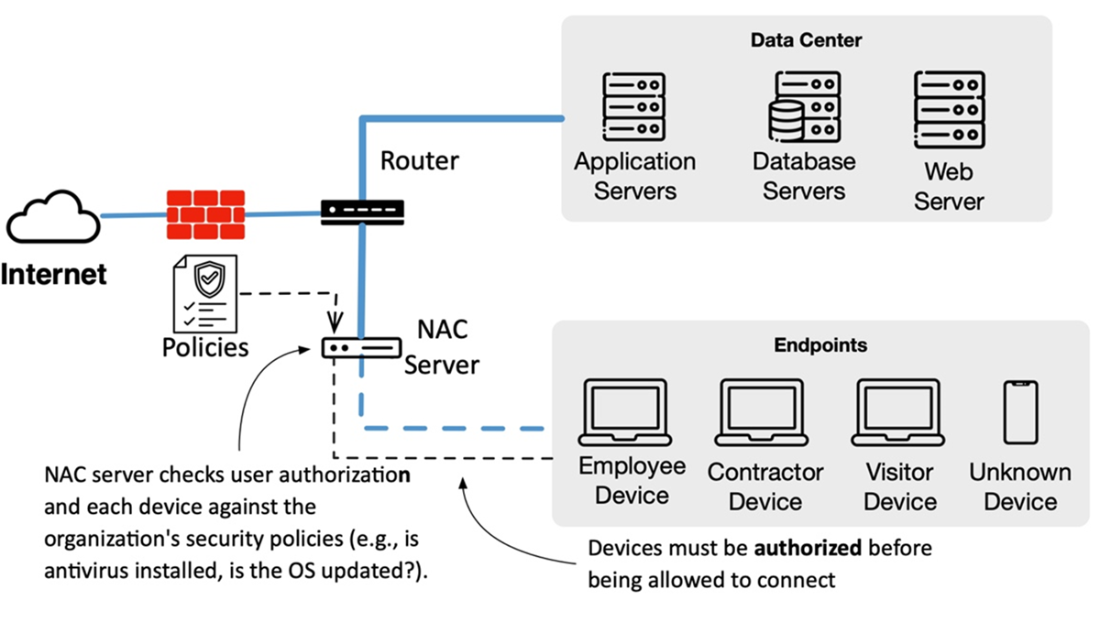
Use the NAC architecture illustration as a visual guide to its setup. section 12.5.4
