Network virtualization abstracts network functions and segments, allowing logically separate networks to share physical infrastructure while operating independently. section 17.1
Recognize the two principal network virtualization forms:
- VLANs divide one physical LAN into multiple logical LANs. Hosts in different VLANs cannot communicate directly despite sharing the same physical switch. section 17.1
- VPNs overlay private, secure networks on shared or public infrastructure such as the internet, creating protected connections between devices. section 17.1 section 17.4
- Virtual machines and containers extend virtualization into computing by isolating operating systems and applications on one physical server; VMs also connect through virtual NICs and virtual switches. section 17.1 section 17.4
One switch, three logical networks
Six PCs can connect to one physical switch while belonging to three VLANs. The shared hardware remains one physical LAN, but each VLAN forms a distinct logical network and blocks direct communication across VLAN boundaries. section 17.1
Figure 17.1 VLANs create distinct virtual LANs from a single physical LAN.
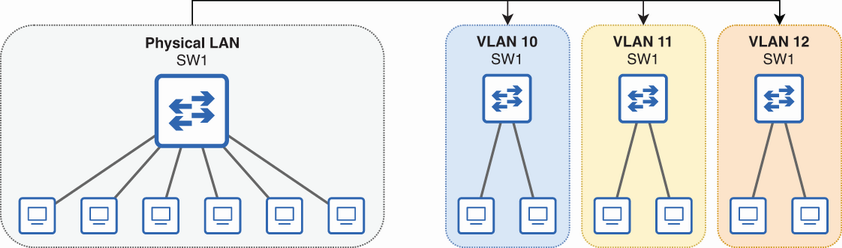
Visualize how VLANs create distinct virtual LANs from a single physical LAN. section 17.1
Figure 17.2 A VPN is a secure virtual network created over a physical network.
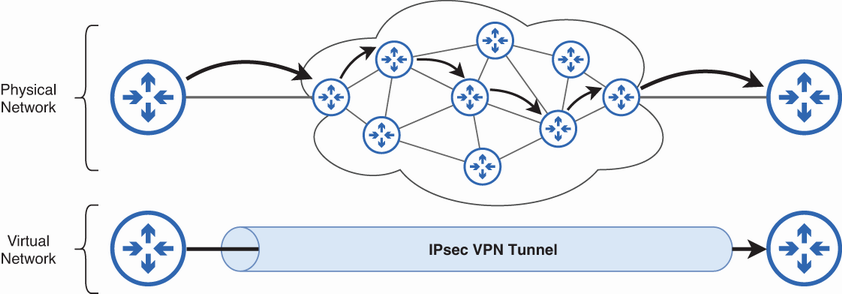
Visualize how a VPN forms a secure virtual network over shared physical infrastructure. section 17.1
