liveBook · Manning

Nondeterminism

As explained in Build High Value Software Systems

The property of behavior that can produce different outcomes for the same input because of probabilistic processes or varying execution conditions.

Nondeterminism means an AI system can choose different patterns for similar coding tasks. Without a shared standard, that can leave different features with different approaches to error handling, logging, or validation. section 4.3.3

Referencing the same team standard in prompts can make repeated work more consistent. Consistency gives developers a shared baseline for onboarding, debugging, refactoring, and code review. section 4.3.3

Error handling across features

Prompts that direct AI to use the team's AppError classes, fail-fast pattern, and context logging produce the same stated pattern for payment and refund flows. section 4.3.3

Figure 4.6 Without defined standards, each AI-generated feature adopts different patterns, creating a maintenance burden and technical debt.
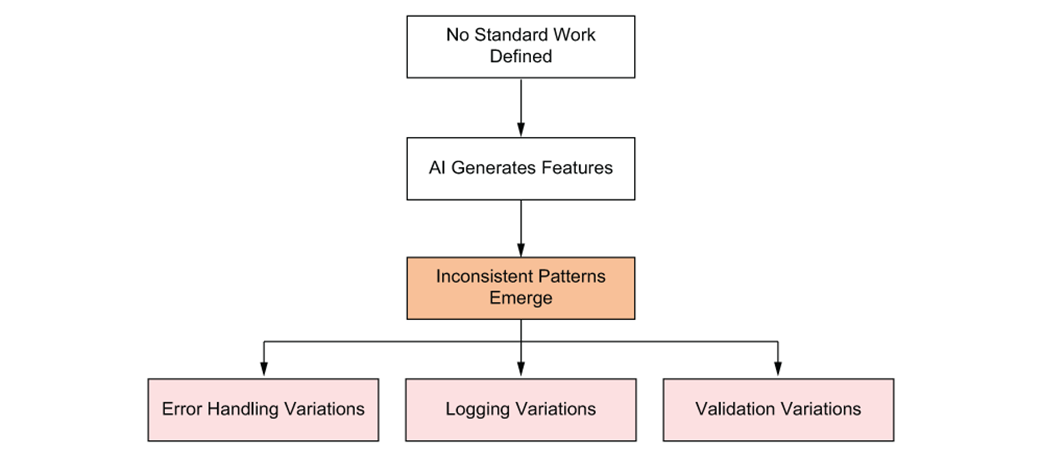
See how different AI-generated patterns across features can create maintenance burden and technical debt. section 4.3.3


How Build High Value Software Systems covers it

How deep it goes
Contrasts inconsistent patterns with standards-driven consistency, without explaining the system's underlying mechanisms.
Examples
Compares error handling in payment and refund flows and cites differing logging and validation patterns.
What you can do after
Apply team standards in AI prompts to make repeated feature work produce more consistent patterns.
How it connects
Connects AI-assisted coding with software standards, debugging, refactoring, and code review.

Also explained in

Compare how 5 books explain nondeterminism →

Related concepts

This explainer was generated by Manning's knowledge graph from the text of Build High Value Software Systems. The section links point to the parts of the book it draws on.


