liveBook · Manning

Onboarding

As explained in AI Recommender Systems

An onboarding flow is a sequence of initial interactions that gathers information from a new user and introduces the user to a platform or service.

An onboarding flow is a sequence of initial interactions that gathers a new user's preferences and gives a recommender system immediate signal. section 4.7

Use onboarding to mitigate cold start when users sign up or subscribe; users who do not identify themselves cannot be onboarded this way. section 4.7

Balance immediate engagement against faster personalization: initial preferences can support recommendations before interaction history exists, while popularity remains the fallback for completely unknown users. section 4.7

Figure 4.19 The different stages of a user's lifecycle, and which types of recommendations can be used at each stage.
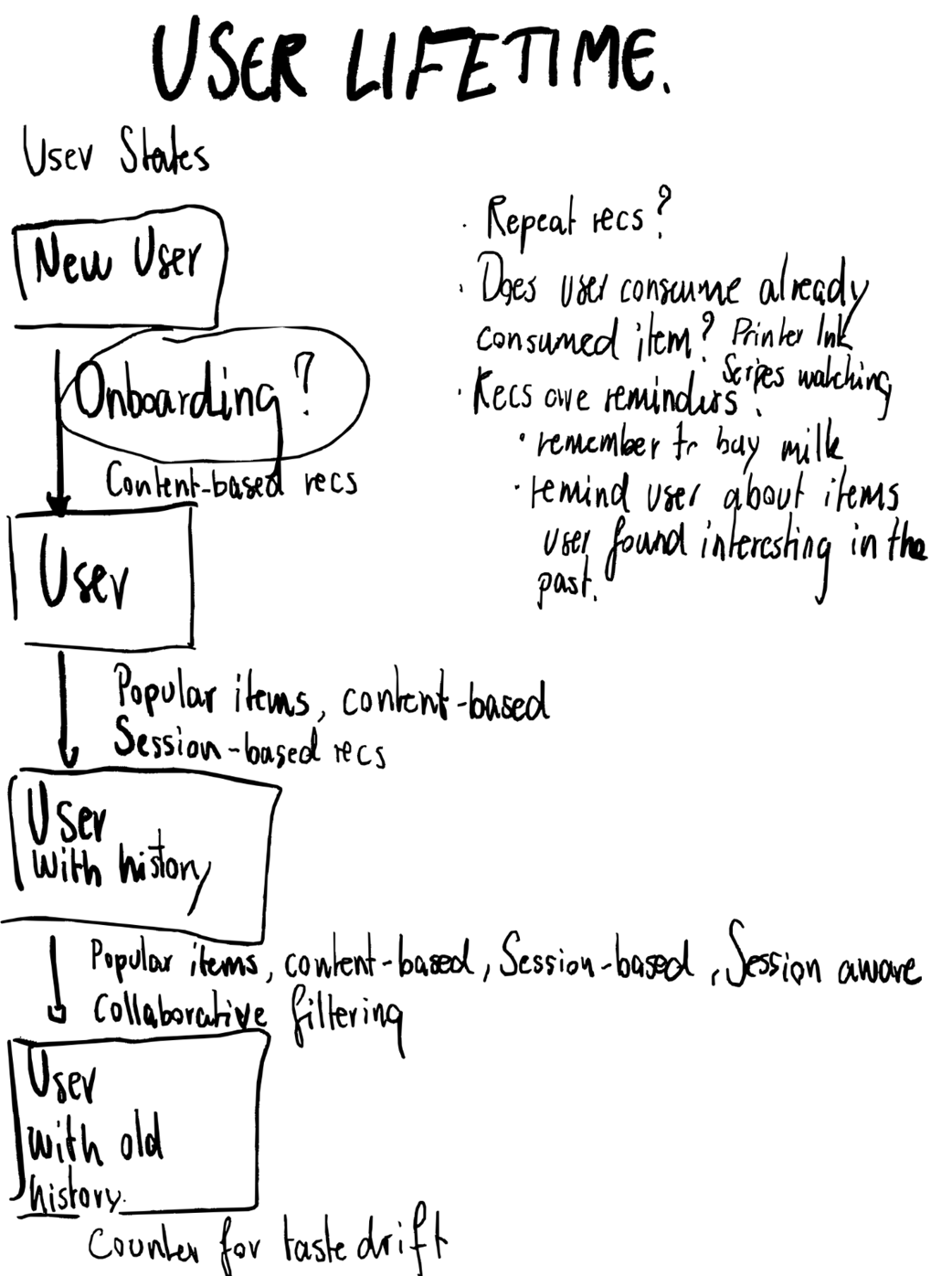
Use the lifecycle map to position onboarding before content-based, contextual, session-based, and collaborative recommendation strategies become available. section 4.7

How AI Recommender Systems covers it

How deep it goes
Defines the role and trade-off of onboarding but stops short of specifying interaction design or implementation steps.
Examples
Uses preference questions for new users as the concrete onboarding example.
What it assumes
Assumes an identifiable signup or membership relationship and distinguishes it from anonymous platform use.
What you can do after
Apply it to give recommendation systems initial user information before interaction history accumulates.
How it connects
Connects cold-start handling with popularity-based, content-based, contextual, session-based, and collaborative filtering.

Also explained in

Compare how 5 books explain onboarding →

Related concepts

This explainer was generated by Manning's knowledge graph from the text of AI Recommender Systems. The section links point to the parts of the book it draws on.


