Open-weight model
An open-weight model is a machine-learning model whose trained parameter values are made available for others to use, subject to applicable terms, without necessarily making its training data or source code available.

Introduction to Generative AI, Second Edition
An open-weight model is a machine-learning model whose learned parameter values are publicly available for others to use or modify, subject to its license.
- How it is used
- Situates open-weight models within the growth of accessible AI and debates about openness, privacy, and governance.
- How deep it goes
- Distinguishes shared weights from fully open-source licensing and surveys benefits and risks without implementation detail.
- Examples
- Traces Llama 1 and its Alpaca derivative and notes privacy inquiries into DeepSeek.
- What you can do after
- Evaluate and understand the trade-offs of open-weight releases, including license restrictions, customization, and responsibility for safeguards.
Read how Introduction to Generative AI, Second Edition explains open-weight model →
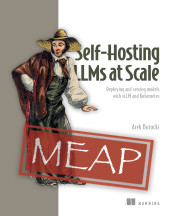
Self-Hosting LLMs at Scale
A model whose trained parameters are made available for others to download or use, without necessarily making its training data or code open.
- How it is used
- Frames open-weight models as candidates for self-hosted language-model serving under organizational control.
- How deep it goes
- Defines open weights, distinguishes open-source AI, and develops selection and licensing checks without prescribing a universal configuration.
- Examples
- Uses Meridian's model search and license review alongside families such as Llama, Qwen, and Mistral.
- What you can do after
- Evaluate model candidates for workload fit, infrastructure needs, license restrictions, and upstream lineage before deployment.
Read how Self-Hosting LLMs at Scale explains open-weight model →
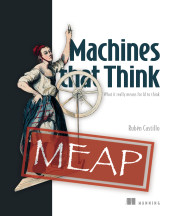
Machines that Think
An open-weight model is a machine-learning model whose learned parameter values are made available for others to download and run.
- How it is used
- Frames open-weight models as an alternative to managed model access, trading greater deployment control for infrastructure responsibility.
- How deep it goes
- Defines open-weight access and compares deployment costs and restrictions, without providing a self-hosting procedure.
- Examples
- Contrasts smaller or optimized models running on laptops with production deployments requiring servers, storage, and scaling.
- What you can do after
- Supports evaluating self-hosting against managed API access by weighing control, restrictions, infrastructure, and usage volume.
Also covered in
- Build a DeepSeek Model (From Scratch)In early access (MEAP)
- Machine Learning Platform Engineering
- Build Applications with Local AI Models on a Mac
What to know first
- language modelA language model is a computational model that represents patterns in linguistic sequences to assign probabilities, predict, generate, or evaluate language.
- DeepSeekDeepSeek is a family of artificial-intelligence models, including large language models, developed by DeepSeek.
- fine-tuningFine-tuning is the continued training of a pretrained model on targeted data or objectives to adapt its parameters or behavior to a task, domain, or use.
- LlamaLlama is a family of large language models developed by Meta.
Related concepts
- open-source modelcontrasts with · An open-source model is a machine-learning model whose relevant artifacts, such as code or weights, are made available under terms permitting specified forms of access, use, modification, or redistribution.
- Llamaincludes · Llama is a family of large language models developed by Meta.
- DeepSeekincludes · DeepSeek is a family of artificial-intelligence models, including large language models, developed by DeepSeek.
- AI modelkind of · An AI model is a computational system that learns or encodes patterns to map inputs to outputs such as predictions, classifications, or generated content.
Questions about open-weight model
What is open-weight model?
An open-weight model is a machine-learning model whose trained parameter values are made available for others to use, subject to applicable terms, without necessarily making its training data or source code available.
Which Manning books explain open-weight model?
Introduction to Generative AI, Second Edition, Self-Hosting LLMs at Scale and Machines that Think.
What should I know before learning open-weight model?
Manning books that teach open-weight model usually introduce language model, DeepSeek, fine-tuning and Llama first.
What is the difference between open-weight model and open-source model?
An open-weight model is a machine-learning model whose trained parameter values are made available for others to use, subject to applicable terms, without necessarily making its training data or source code available. An open-source model is a machine-learning model whose relevant artifacts, such as code or weights, are made available under terms permitting specified forms of access, use, modification, or redistribution.
What kinds of open-weight model are there?
Kinds of open-weight model include GLM-5, Llama and DeepSeek.
What is open-weight model a kind of?
Open-weight model is a kind of AI model. An AI model is a computational system that learns or encodes patterns to map inputs to outputs such as predictions, classifications, or generated content.
These guides are generated from the text of Manning books by Manning's knowledge graph and link to the sections they draw on. The full books are available on liveBook and at manning.com.