Operational burden is the ongoing complexity an organization must carry to run an architecture responsibly. Budget does not merely limit purchasing power; it changes which level of operational complexity is realistic. section 2.2
Operational burden rises or falls with architectural choices:
- Managed services, stronger resilience, richer observability, and looser coupling can reduce operational burden while increasing total cost of ownership. section 2.2
- Tighter budgets favor fewer deployable units, lower overhead, and selective investment in resilience and scalability. section 2.2
- Additional spending is strongest when it reduces outage impact, recovery time, compliance exposure, fragility, or future change cost. section 2.2
Internal reporting capability
A modest internal reporting system may not justify several services, an event stream, separate read models, premium databases, centralized logging, and high availability. Predictable usage, scheduled refreshes, and limited availability requirements can support a simpler design with less operational burden. section 2.2
Figure 2.3 Budget changes the architecture that is realistic.
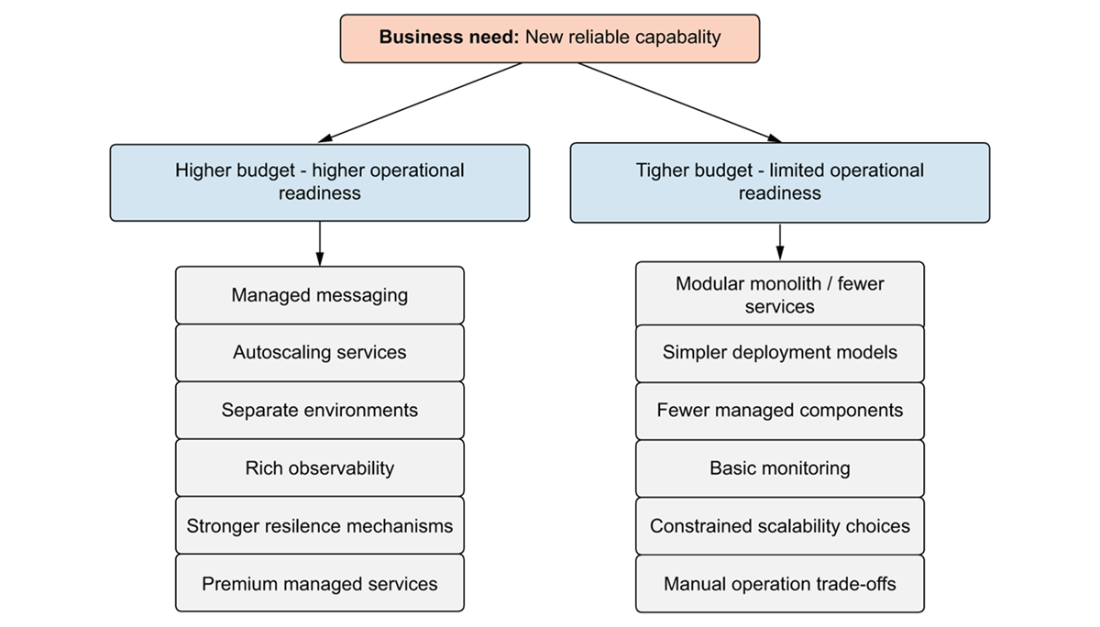
Use the figure to compare how budget changes the realistic balance between capability, resilience, cost, and operational burden. section 2.2