liveBook · Manning

Ordinal data

As explained in Data Without Labels

Ordinal data consists of categories that have an inherent order but not necessarily meaningful numeric spacing.

Ordinal data consists of qualitative, or categorical, values that can be arranged in a meaningful sequence. Unlike nominal data, its categories have an order; unlike quantitative data, the category labels do not necessarily represent measurable spacing. section 1.2.2

Common ordered categories include:

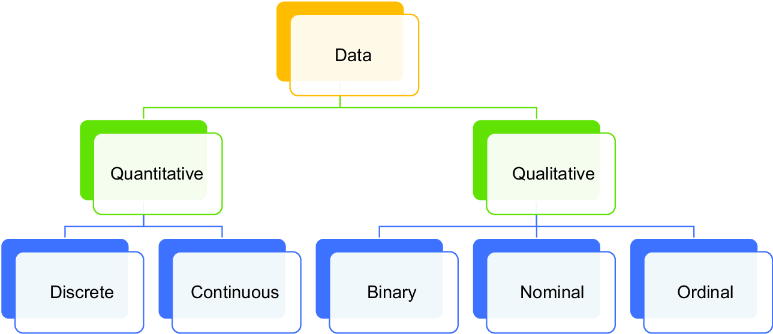
Figure 1.2 The divisions and subdivisions of data
figure

Use the data hierarchy to locate ordinal data among qualitative and quantitative data types, alongside binary and nominal categories. section 1.2.2


How Data Without Labels covers it

How deep it goes
Defines ordinal data and contrasts it with nominal data, stopping before encoding, modeling, or statistical treatment.
Examples
Uses fast/medium/slow and positive/neutral/negative as examples of ordered categories.
What you can do after
Evaluate/understand whether categorical values possess an inherent order rather than merely distinct labels.
How it connects
Ties ordinal data to qualitative data, categorical variables, binary data, nominal data, and quantitative data.

Also explained in

Compare how 8 books explain ordinal data →

Related concepts

This explainer was generated by Manning's knowledge graph from the text of Data Without Labels. The section links point to the parts of the book it draws on.





