The Open Systems Interconnection (OSI) model is a seven-layer framework for describing how interconnected systems communicate. Think of it as a blueprint: each layer has a particular job, making a complex network easier to understand and discuss. section 11.10 section 11.6
The seven layers, from the application end down to the physical connection, are:
- Application, Presentation, Session, Transport, Network, Data Link, Physical. section 11.10
- The Data Link layer handles communication between nodes on the same local network; network interface cards and MAC addresses belong here. section 11.12
Why layers help
A video can travel over Wi-Fi, cellular service, or fiber optics. A layered model helps explain how the underlying network technology can vary while the application continues to work. section 11.6
OSI separates communication functions more finely than the TCP/IP model, which groups them into fewer layers. OSI is useful for understanding network protocols and considering where security or performance concerns arise; it is not a step-by-step implementation plan. section 11.6
Figure 11.9 A side-by-side illustration of the layers of the OSI and TCP/IP network stack models
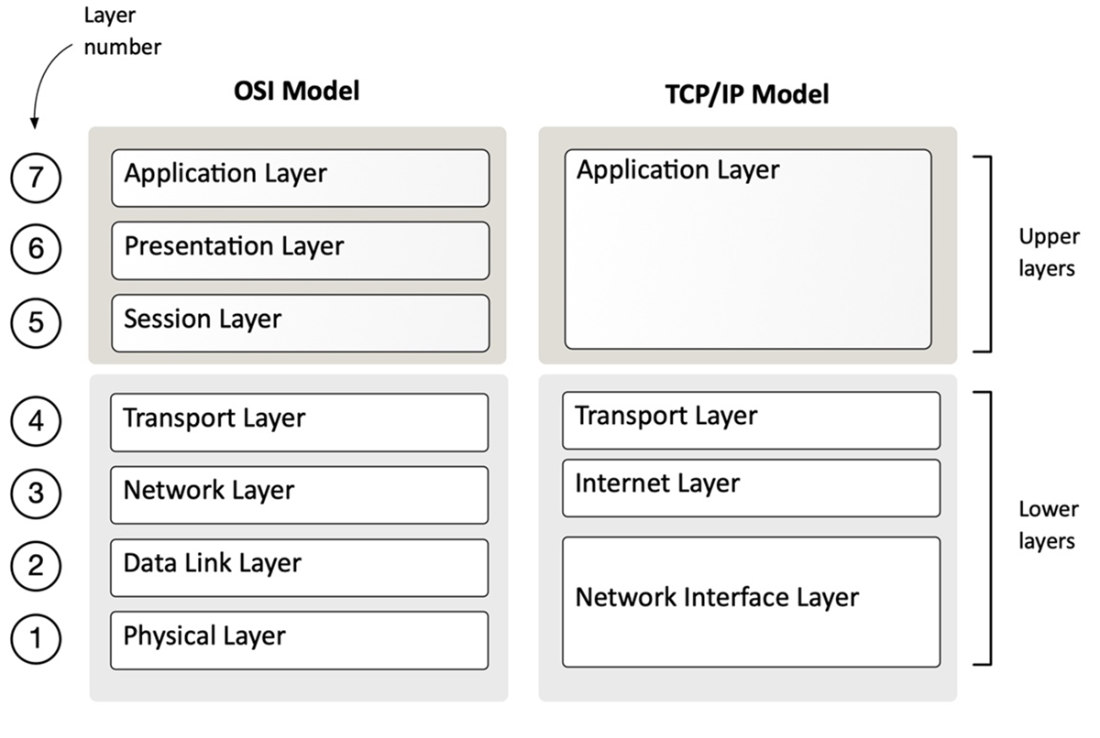
Compare the OSI and TCP/IP layer stacks side by side. section 11.6


