liveBook · Manning

Path analysis

As explained in Causal Inference for Data Science

Path analysis is a statistical technique that decomposes relationships among variables into contributions from specified causal paths.

Path analysis calculates how correlation arises from specified paths in a causal graph, separating direct and indirect effects across confounder, mediator, and collider structures. section 6.2.2

A practical analysis asks how graph structure changes observed and adjusted relationships:

  • Compare the correlation between X and Y with regression coefficients from Y ~ X and Y ~ X + Z. section 6.2.2
  • Use variance, covariance, correlation, and linear-regression equations to calculate how association propagates through arrows. section 6.2.2
  • Check whether conditioning changes correlation differently for confounders, mediators, and colliders. section 6.2.2
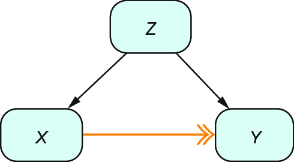
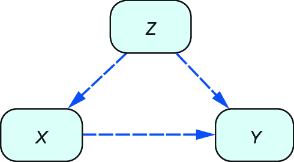
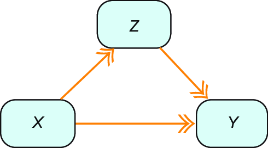
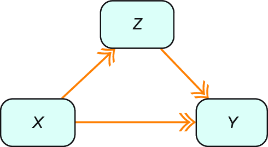
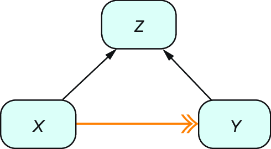
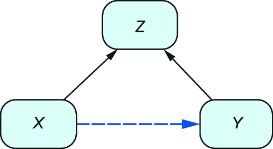
Table 6.12 Differences between causal paths (dashed lines) and correlation propagation (double-headed arrows)
Case
Causal paths
Correlation propagation
Confounder
sidebar figure
sidebar figure
Mediator
sidebar figure
sidebar figure
Collider
sidebar figure
sidebar figure

Compare causal paths with correlation propagation across confounder, mediator, and collider graphs. section 6.2.2

How Causal Inference for Data Science covers it

How deep it goes
Works through equations for variance, covariance, correlation, and regression, but does not extend beyond these graph cases.
Examples
Uses confounder, mediator, and collider graphs alongside regressions of Y on X with and without Z.
What it assumes
Assumes basic variance, covariance, correlation, and linear-regression equations.
What you can do after
Evaluate how correlations propagate through graph paths and compare them with direct and total effects.
How it connects
Connects causal graphs with confounding, mediation, colliders, correlation, regression, direct effects, and total effects.

Related concepts

This explainer was generated by Manning's knowledge graph from the text of Causal Inference for Data Science. The section links point to the parts of the book it draws on.