An API payload is the data carried in a request or response, distinct from the exchange’s control information. A request might promise a JSON object with id, name, and price; the server returns its own response body under the contract. section 6.3.2
Keep payload choices tied to the contract and the client’s actual needs:
- Preserve the fields clients expect: changing or omitting them can break an integration. section 6.3.2
- Avoid sending data the client does not need. Large JSON payloads consume bandwidth and AI tokens; narrower tools can reduce waste, though too many specific endpoints risk API sprawl. section 6.5.1
The oversized response
If an AI only needs a user’s email, returning a 50KB JSON blob wastes tokens and can crowd its instructions out of context. A more focused tool can send only what is needed. section 6.5.1
Figure 6.5 To successfully cross the Network Boundary, both the Client and Server must strictly adhere to the overarching Safety Clause (Idempotency) and the four operational elements of the exchange: the Endpoint, Headers, Request/Response Body, and Status Code.
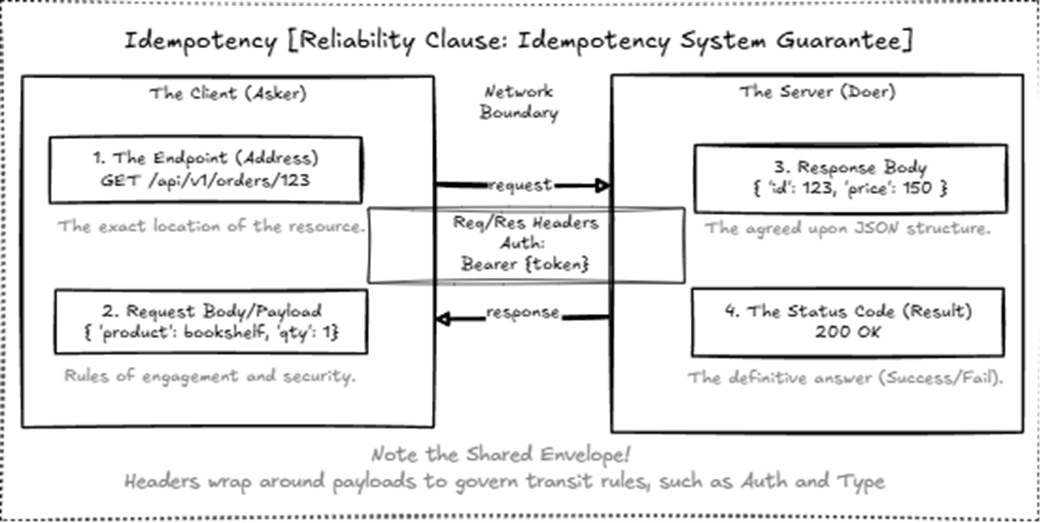
See how request and response bodies fit alongside the endpoint, headers, and status code in an API exchange. section 6.3.2











