liveBook · Manning

Permutation feature importance

As explained in Machine Learning System Design

Permutation feature importance measures a feature's importance by randomly shuffling its values and measuring the resulting change in model performance.

Permutation feature importance is a model-agnostic technique: randomly shuffle one feature’s values, then observe how much model performance decreases. A larger decrease indicates greater importance for the model’s overall behavior. section 11.2.1

Use the technique as a practical feature-review checklist:

  • Treat the model as a black box and evaluate the effect of perturbing individual inputs. section 11.2.1
  • Compare the resulting performance changes to estimate each feature’s contribution to the model outcome. section 11.2.1 section 11.5.1
  • Use weak contribution as evidence for dropping a feature, alongside feature tests and other importance methods. section 11.5.1

Retail demand forecasting

A Supermegaretail forecasting workflow uses shuffle importance with SHAP, LIME, model coefficients, and gradient-boosting split counts to understand feature contribution and refine the feature set. section 11.5.1

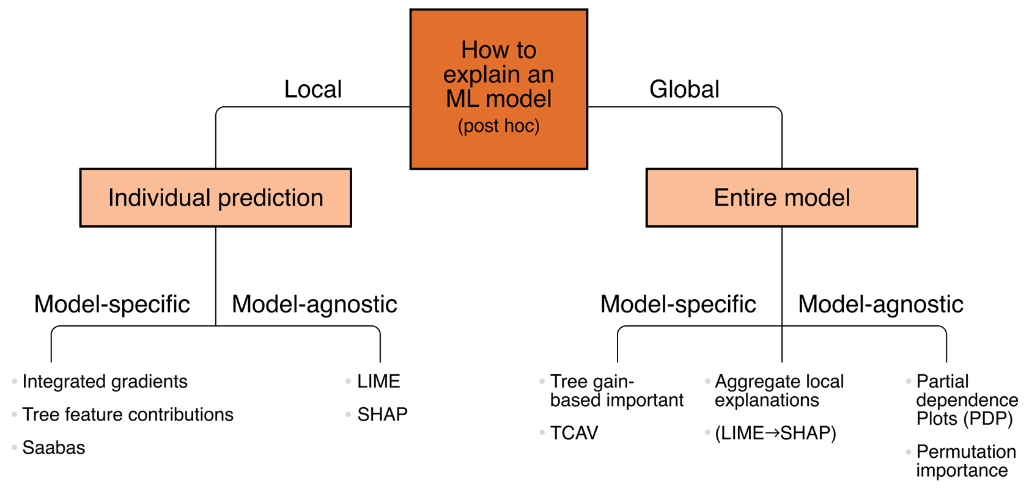
Figure 11.3 A taxonomy of model explanation methods
figure

Explore the taxonomy that places permutation feature importance among model-agnostic methods for interpreting an entire model. section 11.2.1


How Machine Learning System Design covers it

How deep it goes
Defines random permutation and performance-decrease measurement without detailing implementation procedures or statistical caveats.
Examples
Uses shuffle importance in retail forecasting alongside SHAP, LIME, coefficients, and gradient-boosting split counts.
What it assumes
Assumes a model and feature set, while distinguishing black-box importance from model-specific importance.
What you can do after
Apply it to compare feature contributions and identify features that contribute little to model outcomes.
How it connects
Connects model-agnostic explanation with SHAP, LIME, built-in importance, recursive feature elimination, and feature tests.

Also explained in

Compare how 2 books explain permutation feature importance →

Related concepts

This explainer was generated by Manning's knowledge graph from the text of Machine Learning System Design. The section links point to the parts of the book it draws on.