A database Pod needs somewhere to keep its data when the Pod is replaced. A persistent volume (PV) is the Kubernetes object representing storage backed by a disk. Instead of naming a particular cloud disk in the Pod, you normally give the Pod a persistent volume claim (PVC) that requests the storage it needs. section 9.0 section 9.1.2
The Pod references the claim; the claim requests a capacity and access mode; and Kubernetes creates or finds a suitable PV and binds them. The PV represents the available storage and references the underlying disk. This keeps the Pod’s storage request separate from provider-specific disk details. section 9.1.2
Figure 9.2 A Pod that references a PersistentVolumeClaim that gets bound to a PersistentVolume, which references a disk
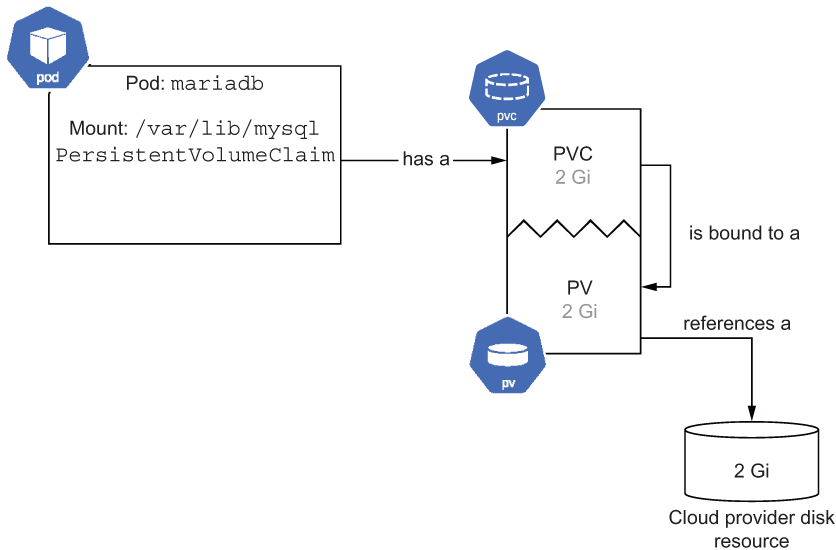
Follow the links from Pod to claim, from claim to bound persistent volume, and from persistent volume to disk. section 9.1.2
Choose an access mode for the claim:
- ReadWriteOnce: read/write storage mounted to a single Pod, like a traditional hard drive. section 9.1.2
- ReadOnlyMany: existing data shared read-only across multiple Pods. section 9.1.2
- ReadWriteMany: file storage that multiple Pods can read and write simultaneously, when supported. section 9.1.2
Give MariaDB its own storage
A MariaDB Pod mounts a claim at /var/lib/mysql, where it keeps its data. The claim requests 2 GiB with ReadWriteOnce access. After creation, inspect the claim and PV with kubectl: their Bound status and reciprocal references show which storage the Pod will use. Unlike mounting a provider disk directly, this does not require the Pod manifest to name a disk created manually outside Kubernetes. section 9.1.1 section 9.1.2
Persistent does not mean impossible to delete. A common default reclaim policy is Delete: deleting the bound claim can also delete its disk, even though deleting a StatefulSet leaves its claims in place. For data you must recover, use a StorageClass with a Retain reclaim policy and verify the PV’s policy. A retained disk can be relinked by re-creating its PV and PVC, including in another cluster. section 9.3






