liveBook · Manning

PII detection

As explained in Building Reliable AI Systems

The process of identifying information in data or outputs that can identify a specific person.

PII detection identifies information that can identify a person. It helps protect sensitive user information and reduce privacy risks in AI systems. section 11.1.6 section 11.6.6

Treat detection as one safeguard, not a guarantee: add detection and redaction to data pipelines, minimize collection, and account for regulatory requirements. Layered defenses compensate for the limits of any single method. section 11.1.6 section 11.6.6

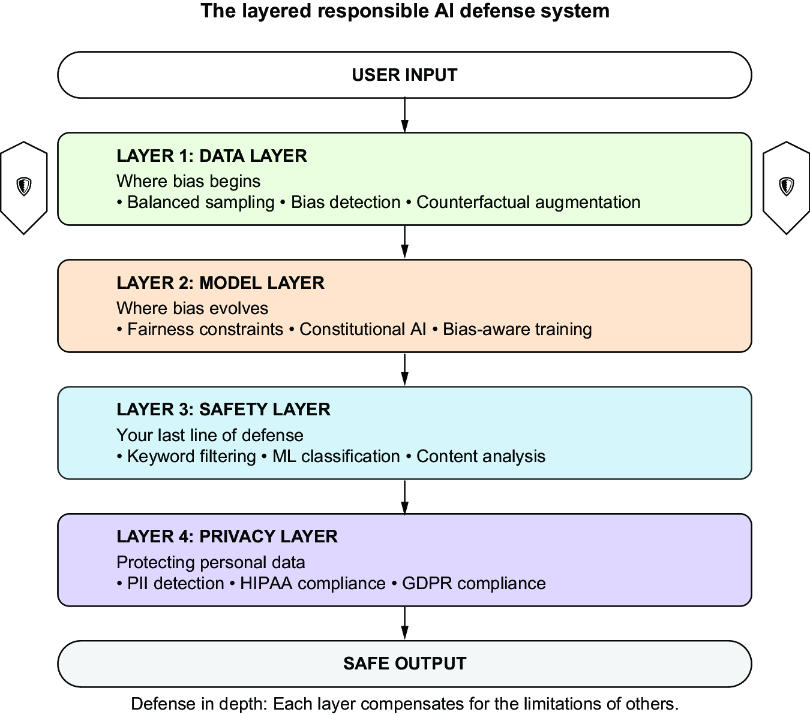
Figure 11.3 The layered responsible AI defense system. Each layer serves a different purpose to protect users.
figure

The diagram places privacy alongside data, model, and safety protections in a layered responsible AI system. section 11.1.6


How Building Reliable AI Systems covers it

How deep it goes
Recommends pipeline detection and redaction but does not specify detectors, implementation, or accuracy evaluation.
What you can do after
Understand its role in privacy pipelines and pair detection with redaction, data minimization, and regulatory compliance.
How it connects
Connects privacy protection with data minimization, regulatory compliance, safety filtering, and responsible AI.

Also explained in

Compare how 2 books explain PII detection →

Related concepts

This explainer was generated by Manning's knowledge graph from the text of Building Reliable AI Systems. The section links point to the parts of the book it draws on.