liveBook · Manning

Platform as a service

As explained in Fundamentals of Cybersecurity

Platform as a service is a cloud service model that provides a managed application-development and runtime platform without requiring customers to manage the underlying infrastructure.

Platform as a Service (PaaS) is a cloud model that gives customers a ready-to-use platform for building, testing, and deploying applications. The provider manages the operating system and underlying infrastructure; customers focus primarily on their applications and data. This reduces the operational burden compared with managing more of the technology stack themselves. section 13.5

PaaS examples

Google App Engine, Microsoft Azure App Service, and Heroku are examples of PaaS offerings. section 13.5

Figure 13.4 Comparison of responsibilities of users and vendors for the distinct service models
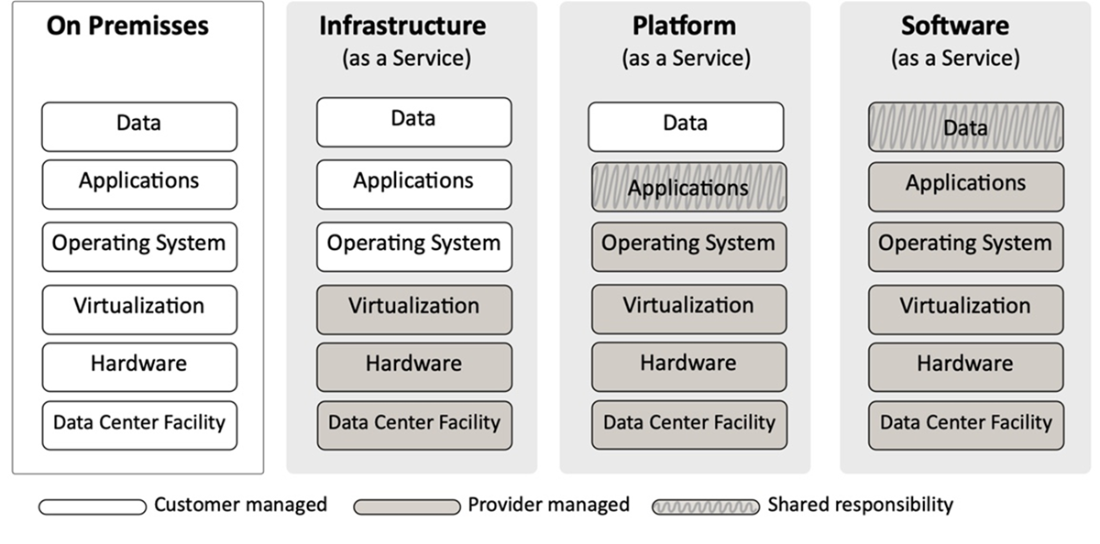
Compare how responsibility shifts from the customer to the provider across cloud service models. section 13.5


How Fundamentals of Cybersecurity covers it

How deep it goes
Distinguishes provider-managed operating systems from customer-managed applications and data, without detailing platform implementation.
Examples
Names Google App Engine, Microsoft Azure App Service, and Heroku as PaaS offerings.
What you can do after
Understand how PaaS reduces customer management responsibilities while leaving applications and data primarily with the customer.
How it connects
Connects PaaS to the shared responsibility model and contrasts it with IaaS and SaaS.

Also explained in

Compare how 8 books explain platform as a service →

Related concepts

This explainer was generated by Manning's knowledge graph from the text of Fundamentals of Cybersecurity. The section links point to the parts of the book it draws on.