Policy alignment makes a model follow specific, actionable rules: procedures, instruction priorities, and institutional or legal requirements. It is distinct from alignment to values or communication style, but the three dimensions can conflict. section 1.2.1
A behavioral specification can make policies explicit through a chain of command and rules for categories such as illegal activity. Constitutional AI can encode procedural rules as principles, but applying them to novel cases depends on the critic’s interpretation. section 8.4.3 section 8.1.4
Tool output and instruction priority
A policy can require treating tool output as data rather than instructions, so it cannot override user or system instructions. section 8.4.3
Figure 1.9 Three pillars of alignment and how they relate to each other.
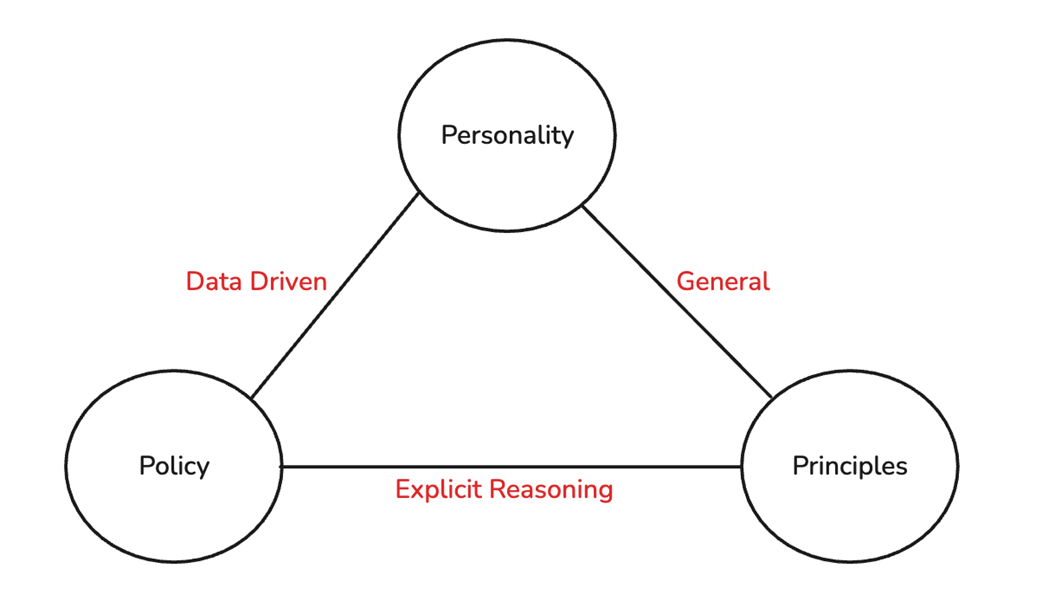
The three-pillar diagram situates policy alignment alongside principled and personality alignment. section 1.2.1
