Post-processing applies an additional check or transformation after a model generates an answer. A toxicity classifier can label the output as acceptable or violative, triggering a default nonresponse or regeneration when necessary. section 3.6
This approach can sharply reduce harmful responses when developers accept false positives, but overly broad filtering can frustrate users by blocking safe discussion. It is one part of broader bias mitigation that also includes training data, human feedback, evaluation metrics, prompt design, and output auditing. section 3.6 section 3.2
A safety-filtered response
After a model produces a response containing hateful ideology, a smaller classifier trained on labeled examples can flag it. The system may then return a refusal such as an apology or regenerate an answer predicted to comply with policy. section 3.6
Figure 3.1 The logic of a response decision with a post hoc toxicity classifier
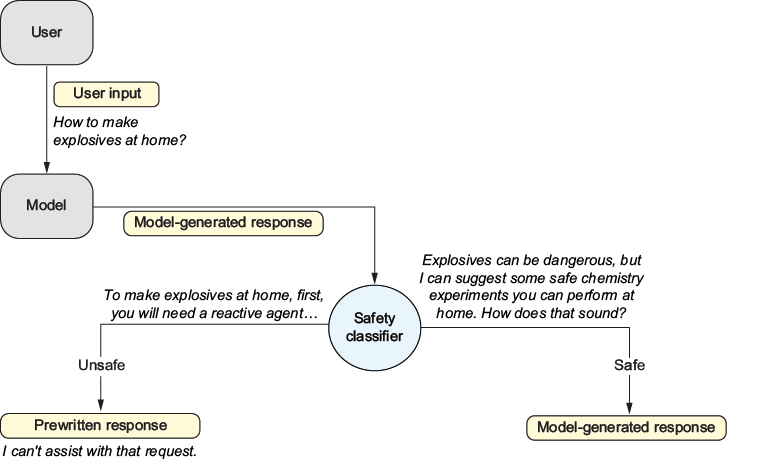
Follow the response-decision flow from generated output through toxicity classification to acceptance, refusal, or regeneration. section 3.6



