Before a project launches, preplanning turns an initial idea into a shared, testable direction. It identifies the project, checks feasibility, sets priority, aligns the work with company vision, defines scope, and identifies key stakeholders. section 10.1.2
Use preplanning to answer the questions that determine whether a project should move forward:
- Can the project realistically be completed within the expected time frame? section 10.1.2
- How important is it compared with other work, and does it support the company’s vision? section 10.1.2
- What belongs within the project’s scope, and which stakeholders must be involved? section 10.1.2
- Which measurable results will show whether the effort succeeds? section 10.1.2
Project Accessible
A toy company facing increased competition proposes an accessibility-friendly product line and a supporting sales website. Preplanning evaluates whether the website is viable, determines its business priority, aligns it with company goals, defines its boundaries, identifies stakeholders, and establishes measurable results. An objective might be to enhance user experience, with results such as raising satisfaction from 80% to 90%, reducing page-load time from five seconds to three, and increasing daily mobile-app users by 20%. section 10.1.2
Figure 10.1 The five phases of a project life cycle
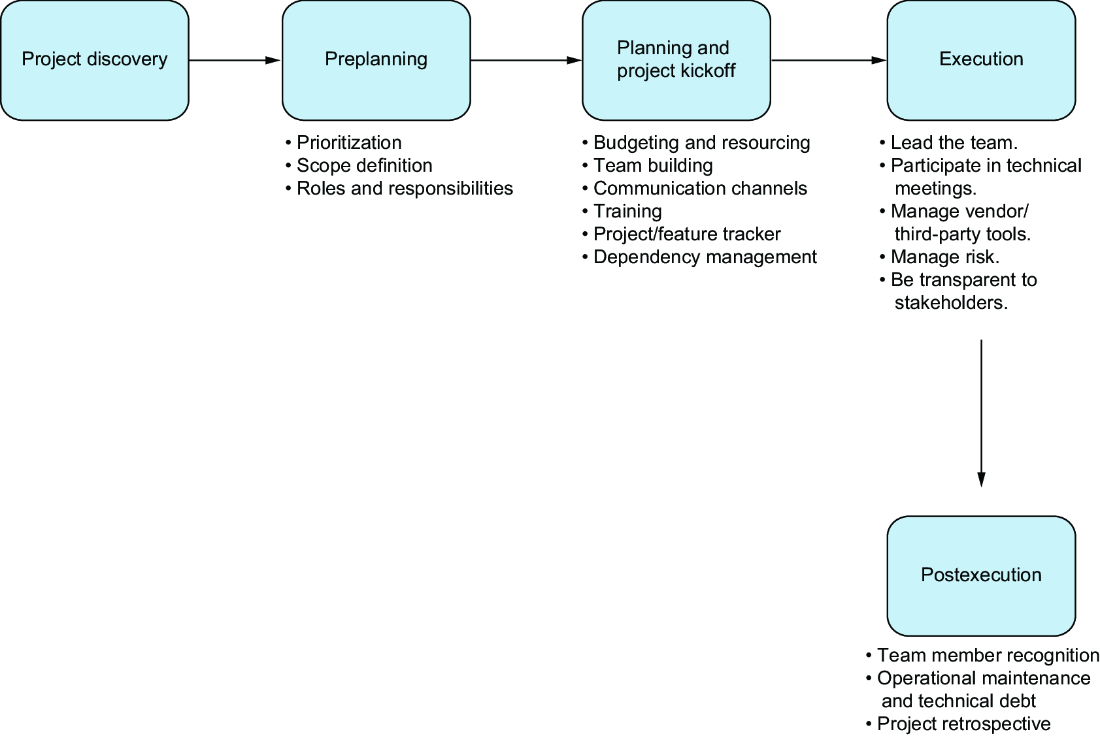
Place preplanning between project discovery and planning and project kickoff; execution and postexecution follow it in the five-phase life cycle. section 10.1
Preplanning establishes the foundation, while the later kickoff phase converts that foundation into a detailed plan with budgets, resources, communication channels, training, and tracking. section 10.3
