A project life cycle is the sequence of five phases that moves a project from discovery to delivery and reflection. It gives engineering managers, product managers, and technical program managers a shared structure for planning, coordinating work, adapting to change, and tracking progress. section 10.0 section 10.3
Use the phases to organize the project’s major responsibilities:
- Project discovery defines the product road map and aligns the technical road map with strategic goals. section 10.3
- Preplanning establishes the foundation by assessing priority, defining scope, and identifying key stakeholders. section 10.3
- Planning and project kickoff turn the initial wish list into a detailed plan covering budget, resources, team building, communication, training, and tracking. section 10.3
- Execution delivers the work through implementation, testing, defect triage, technical decisions, partner management, check-ins, feedback loops, and risk management. section 10.3
- Postexecution recognizes contributors, evaluates success metrics, addresses maintenance and technical debt, and uses a retrospective to improve future work. section 10.3
A coordinated team effort
Treat the project like a sports team preparing for a game: clarify roles, train and plan together, track timing and milestones, then adapt when circumstances change. The project plan, risk list, dependencies, sprint ceremonies, and leadership visibility help the team coordinate toward shared objectives. section 10.0
Figure 10.1 The five phases of a project life cycle
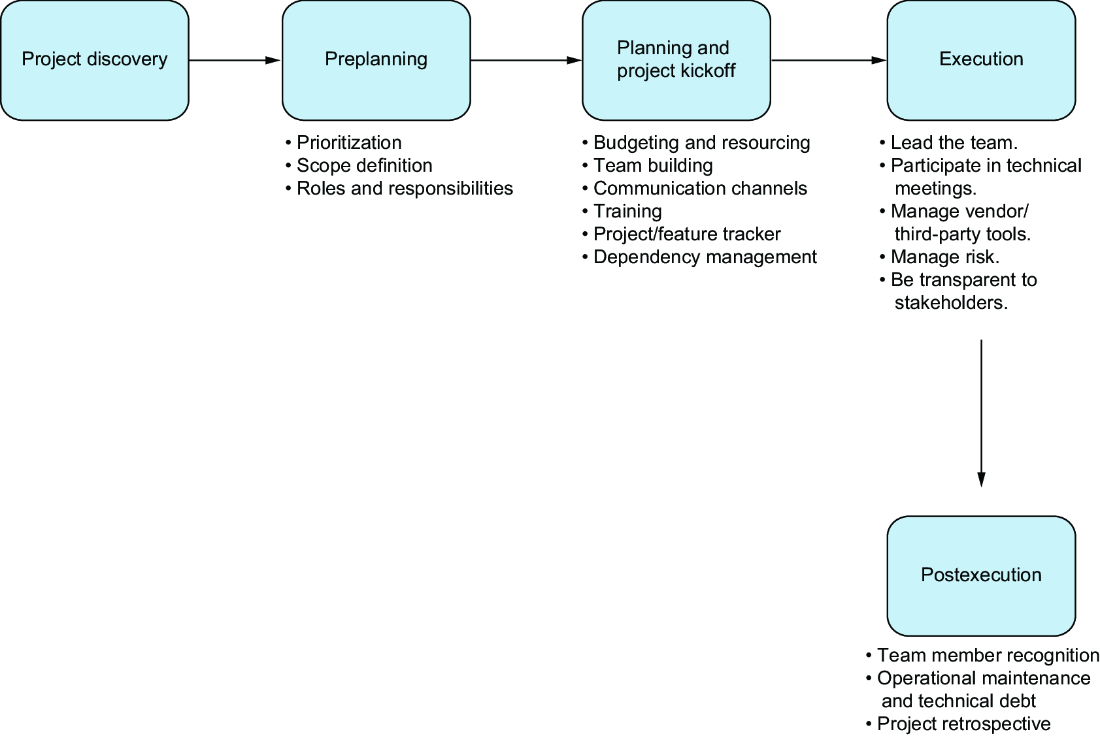
Use the five-phase figure as a quick visual map of the project’s progression from discovery through postexecution. section 10.1
