A public IPv4 address is an IPv4 address that is not in an RFC 1918 range or another reserved range. It must be globally unique so internet routers can identify the intended destination. section 9.1 section 9.4
Distinguish public addressing from private addressing:
- RFC 1918 private ranges are 10.0.0.0/8, 172.16.0.0/12, and 192.168.0.0/16; private addresses may be reused in separate, disconnected networks. section 9.1 section 9.4
- Private IPv4 packets are not routable across the internet and are discarded by the ISP when sourced from or destined for private addresses. section 9.1
- NAT translates private addresses into public addresses so internally addressed hosts can communicate over the internet. section 9.0 section 9.2
Outbound NAT exchange
PC1 sends a packet to 8.8.8.8 using its private source address. R1 translates that source to a public IPv4 address before forwarding the packet; on the reply, R1 translates the destination back to PC1's private address. section 9.2.1
Figure 9.1 Public and private IPv4 addresses. Private IPv4 addresses can be freely used for internal networks and do not have to be globally unique. Public IPv4 addresses, used for communication over the internet, must be globally unique.
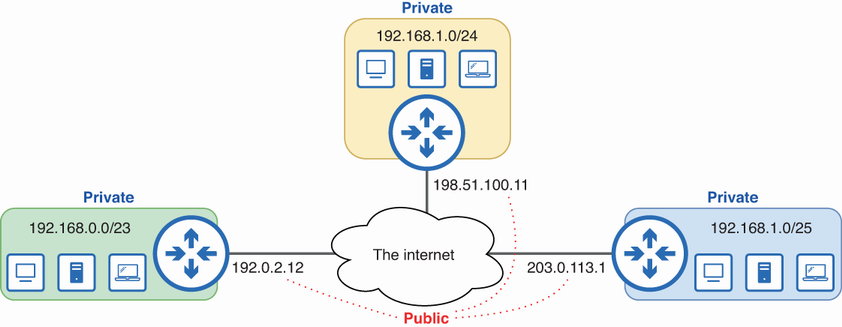
Compare globally unique public addresses with reusable private addresses across connected LANs. section 9.1

