A publisher is a company that develops, produces, distributes, and helps sell books. Its value varies widely: some mainly handle production and distribution, while others add editorial guidance, expert review, design, marketing, and legal support. section 17.4 section 17.4.1 section 17.4.2
Evaluate a publisher by weighing the help it provides against the control and obligations it requires:
- Expect editorial, technical, developmental, copyediting, design, production, marketing, and legal expertise when the publisher is adequately staffed and committed. section 17.4.2
- Trade some control over phrasing, structure, illustrations, tools, deadlines, and branding for professional processes, reach, and production support. section 17.4.4 section 17.7
- Prepare for a multithreaded workflow in which reviews, revisions, marketing tasks, and new chapters may proceed simultaneously. section 17.4.3
- Question whether the publisher’s audience, catalog, process, and economics fit the project, especially when the topic is highly specialized. section 17.4.5 section 17.4.7
A publisher-supported book
An author may revise a chapter after developmental and technical review, answer copyeditor questions, complete marketing research, and write the next chapters while production staff prepare print and digital editions. Missing one deadline can affect the wider team. section 17.4.2 section 17.4.3 section 17.4.4
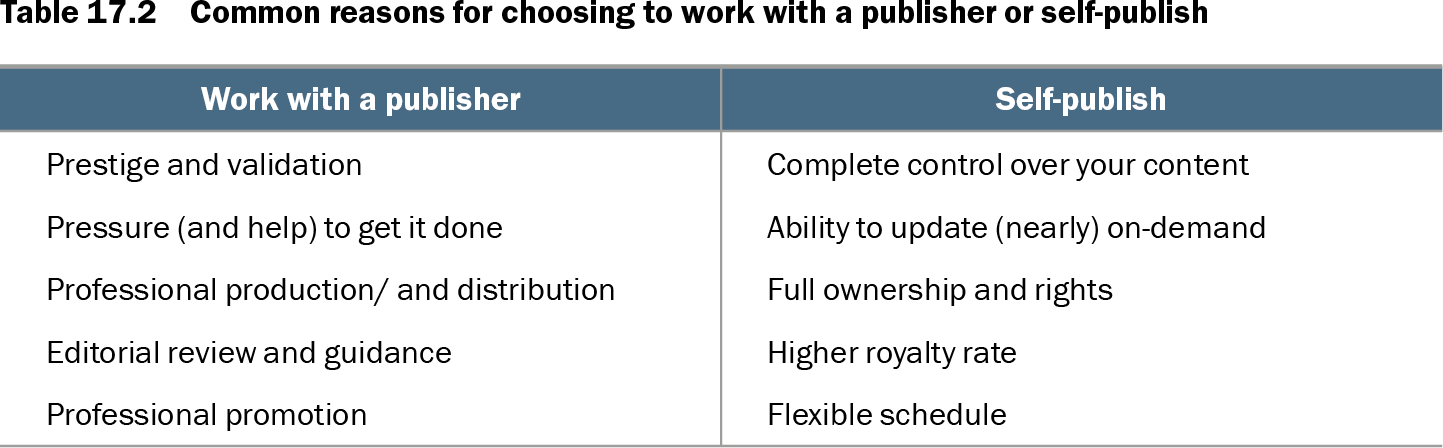
Table 17.2 Common reasons for choosing to work with a publisher or self-publish (view table figure)
| Work with a publisher |
Self-publish |
|---|---|
| Prestige and validation Pressure (and help) to get it done Professional production/ and distribution Editorial review and guidance Professional promotion |
Complete control over your content Ability to update (nearly) on-demand Full ownership and rights Higher royalty rate Flexible schedule |
Compare publisher and self-publishing choices across validation, production, distribution, editorial guidance, control, updates, ownership, royalties, and scheduling. section 17.4