A put option gives its holder the right, not the obligation, to sell an underlying instrument at a previously agreed strike price before a preset expiration date. Its payoff resembles downside protection: when the market price falls below the strike, the holder can buy at market price and sell at the strike; otherwise, the option may expire worthless. section 14.3.2
AAPL put
A put might permit selling AAPL, trading near $150, for $130 at any time during the next six months. This is an American put; a European put permits sale only on its expiration date. section 14.3.2
Put-like payoffs can quantify opportunity cost in tax-loss harvesting. A 30-day lock into a replacement ETF loses additional harvesting benefit only when the primary ETF falls below its harvest price, producing a linearly increasing downside curve. section 14.3.2
Figure 14.5 Potential additional tax benefit as a function of VTI’s price
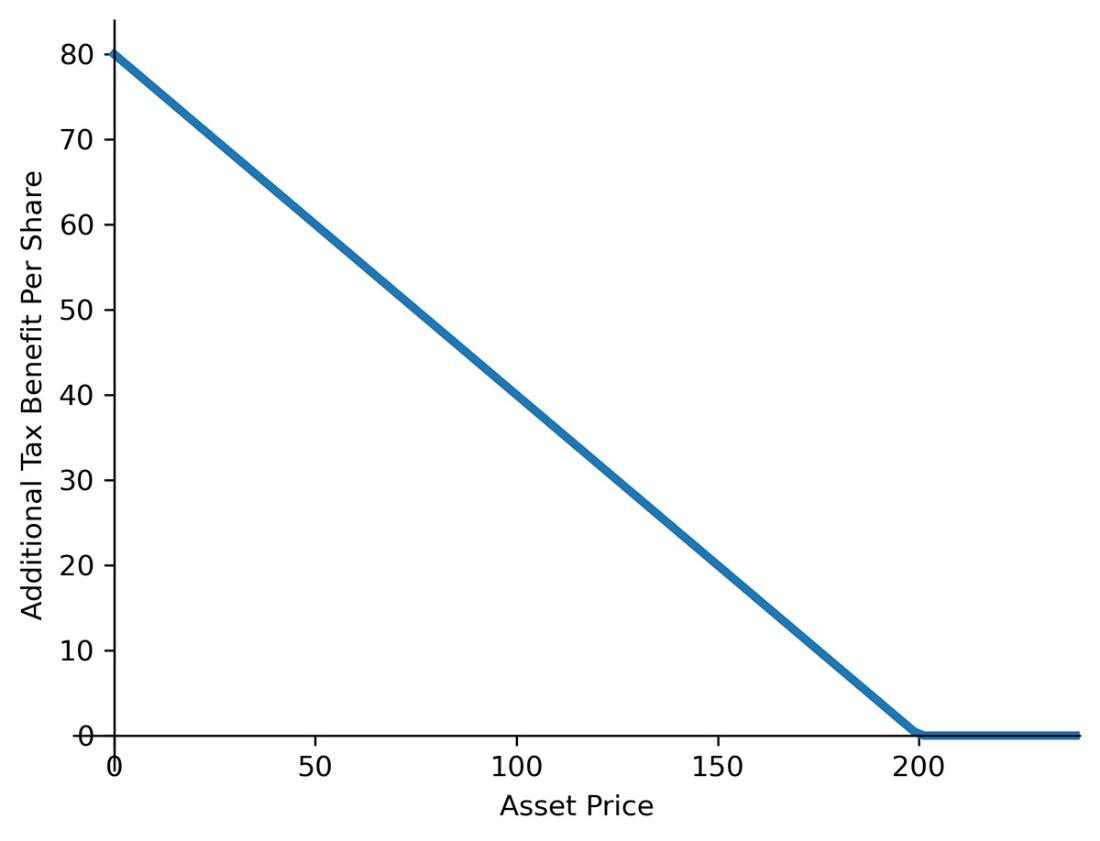
The figure visualizes the put-shaped additional tax benefit forgone while locked into a replacement ETF. section 14.3.2

