Read_csv
read_csv is a function that parses comma-separated or otherwise delimited text into a tabular data structure.

Pandas Workout: 200 exercises to make you a stronger data analyst
read_csv is a pandas function that parses a CSV file or compatible data source into a DataFrame.
- How it is used
- Loads external tabular data into DataFrames for subsequent filtering, grouping, joining, and visualization.
- How deep it goes
- Explains practical parsing choices including delimiters, headers, comments, names, URLs, memory settings, dates, and indexes without cataloging all parameters.
- Examples
- Uses New York taxi rides, Unix passwd records, Bitcoin URL data, surveys, compressed college files, and city weather CSVs.
- What you can do after
- Apply it via pandas to import local, compressed, remote, and file-like CSV inputs with settings matched to data shape.
Read how Pandas Workout: 200 exercises to make you a stronger data analyst explains read_csv →
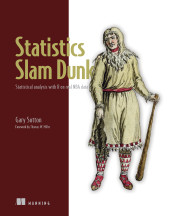
Statistics Slam Dunk
The read_csv() function is a readr function that reads comma-separated-values data into an R data structure.
- How it is used
- Starts NBA analyses by bringing downloaded or spreadsheet-exported CSV data into R for inspection and wrangling.
- How deep it goes
- Explains filenames, paths, working directories, interactive selection, and dimension checks, then defers data preparation to later wrangling.
- Examples
- Uses draft picks, box scores, salaries, team records, and 543,149-row play-by-play data as imported CSV artifacts.
- What you can do after
- Apply it via readr to import a CSV by filename, file path, or interactive selection and verify its dimensions.

Statistics Every Programmer Needs
read_csv is a pandas function that reads comma-separated or otherwise delimited text data into a data frame.
- How it is used
- Loads CSV data into pandas data frames for regression, classification, leading-digit analysis, and process monitoring.
- How deep it goes
- Demonstrates filename and path handling, default headers, `usecols`, and post-import inspection; does not develop other parser options.
- Examples
- Imports marathon split times, raisin measurements, football plays, street addresses, and population counts; previews imported rows and metadata.
- What you can do after
- Apply it via pandas to load a CSV, select needed columns, and inspect the resulting data frame before analysis.
Read how Statistics Every Programmer Needs explains read_csv →
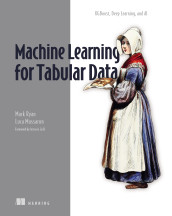
Machine Learning for Tabular Data: XGBoost, Deep Learning, and AI
A pandas function that reads delimited tabular data into a DataFrame.
- How it is used
- Loads delimited datasets into DataFrames as the starting point for tabular analysis and feature preparation.
- How deep it goes
- Defines delimiter-based loading and demonstrates two commands, but does not detail broader parameter configuration.
- Examples
- Uses Auto MPG CSV structure and Tokyo Airbnb listings.csv and calendar.csv datasets.
- What you can do after
- Apply it via pandas to ingest local CSV files and begin inspecting or transforming tabular datasets.
Read how Machine Learning for Tabular Data: XGBoost, Deep Learning, and AI explains read_csv →

Build Python Web Apps with Streamlit
read_csv is a pandas function that reads delimited text data, commonly CSV files, into a dataframe.
- How it is used
- Loads comma-separated data into pandas DataFrames for analysis and Streamlit dashboard applications.
- How deep it goes
- Explains default parsing, DataFrame inspection, dtypes, Arrow backends, column selection, and portable paths without detailing every parameter.
- Examples
- Uses sales_data.csv, type and info inspection, dtype_backend='pyarrow', selected columns, and a reusable data_loader.py function.
- What you can do after
- Apply pandas read_csv to load CSV data, inspect its DataFrame structure, and construct deployment-friendly file paths.
Read how Build Python Web Apps with Streamlit explains read_csv →
Related concepts
- CSVuses · CSV is a plain-text format for tabular data, representing records as rows and fields as values separated by delimiters, conventionally commas, with quoting conventions for special content.
- pandasuses · pandas is an open-source Python library that provides labeled data structures and tools for manipulating and analyzing tabular and other structured data.
- data frameproduces · A data frame is a two-dimensional tabular data structure with labeled rows and columns that can contain values of different types.
- read_excelalternative to · read_excel is a pandas function that reads data from Excel spreadsheet files into a pandas data structure.
- readruses · readr is an R package for efficiently importing and parsing rectangular data files.
- uriused by · A URI (Uniform Resource Identifier) is a standardized character sequence that identifies an abstract or physical resource.
These guides are generated from the text of Manning books by Manning's knowledge graph and link to the sections they draw on. The full books are available on liveBook and at manning.com.