Who should decide how companies collect, store, manage, and use your data? Regulation gives public authorities a way to set binding rules that protect rights and guide conduct. In data governance, it reflects the idea that representative democracy can give people a voice in managing their information. section 4.3
Regulation is not only a restriction. Governments can use laws and regulations to make public data more accessible, encourage Open Data across industries, create economic value, and reduce associated risks. This makes government both a rule-maker and an active participant in the data ecosystem. section 6.5.4
Figure 6.1 Government can serve as an Open Data provider, catalyst, user, and policy maker to create value and mitigate risks.20
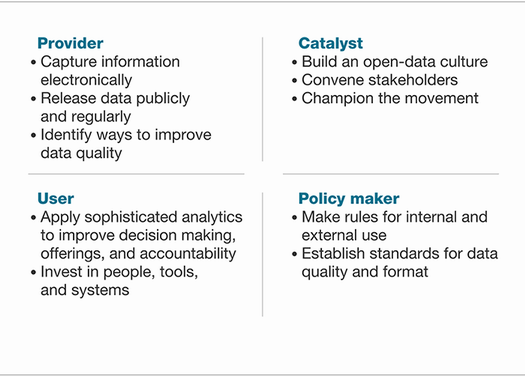
Use the government-role map to compare regulation with government functions as an Open Data provider, catalyst, user, and policy maker. section 6.5.4
The case for public intervention becomes urgent when companies depend heavily on data-driven advertising. Google received 80 percent of its 2020 revenue from advertising, while Facebook received 98 percent. Such incentives make voluntary, proactive change unlikely and strengthen the argument for action by national, state, and local governments alongside individual and watchdog efforts. section 4.6
Public sentiment and data regulation
Public opinion in the United States shifted over nine years toward supporting government intervention in how companies collect, store, manage, and use personal data. section 4.3




