Requirements are the business needs, user goals, and constraints a product or project must satisfy. They turn an unclear design problem into decisions about content, structure, and testing. Strong requirements connect what an organization needs with what users must accomplish. section 3.4.1 section 1.1
Use requirements to guide an iterative design process:
- Identify the target audience, their goals, and the circumstances in which they will use the product. section 3.4.1
- Specify the business requirements or user goals that define success. section 3.4.1
- Translate those requirements into wireframes, visual designs, prototypes, and development decisions. section 10.10 section 3.4.1
- Check that the design meets the initial requirements before testing, then use feedback to revise it. section 11.1.3 section 3.4.1
From requirement to wireframe
A website may need to help people buy a product, book an appointment, or compare hotels. Competitive research, user personas, and business requirements shape a rough wireframe; client approval then allows visual design and development to proceed. section 1.1 section 10.10
Figure 3.4 The user-centered design process starts with identifying a user need you are trying to solve and then moves on to how users are going to utilize what you provide, identifying the requirements needed to solve the use case, building a design solution, and evaluating whether the design fulfills the user’s need. If the process does not satisfy the user’s need, it restarts.
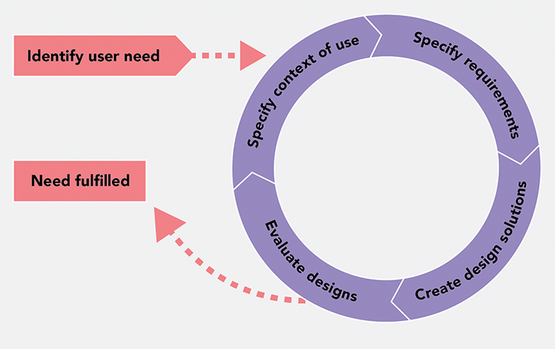
The process diagram connects a user need to context, requirements, design, evaluation, and a restart when the need is not satisfied. section 3.4.1












