User research systematically investigates users’ needs, behaviors, experiences, and challenges so product decisions address real problems rather than assumptions. In platform engineering, it connects developer workflows and pain points to platform priorities, usability, and business outcomes. section 10.2.4 section 10.7.1
A practical research cycle combines:
- Interview developers, operations teams, and other stakeholders to discover workflow obstacles and unmet requirements. section 10.2.4 section 10.2.2
- Use surveys and observational studies to gather evidence about recurring behaviors, challenges, and expectations. section 10.2.4
- Analyze collected responses, summarize findings, and convert validated problems into roadmap priorities. section 10.2.5 section 10.2.2
- Revisit findings through feedback, stakeholder communication, and platform metrics to guide incremental improvements. section 10.2.4 section 10.2.2
From deployment pain to platform priority
A platform team discovers through research that developers spend significant time on manual deployments, causing delays and errors. It prioritizes automated deployment pipelines and self-service infrastructure provisioning, then uses feedback and metrics to assess whether workflows improve. section 10.2.2 section 10.7.1
Figure 10.4 Visual representation of the lifecycle of the platform-as-a-product approach, highlighting how to transition from vision and mission to a fully operational, developer-centric platform
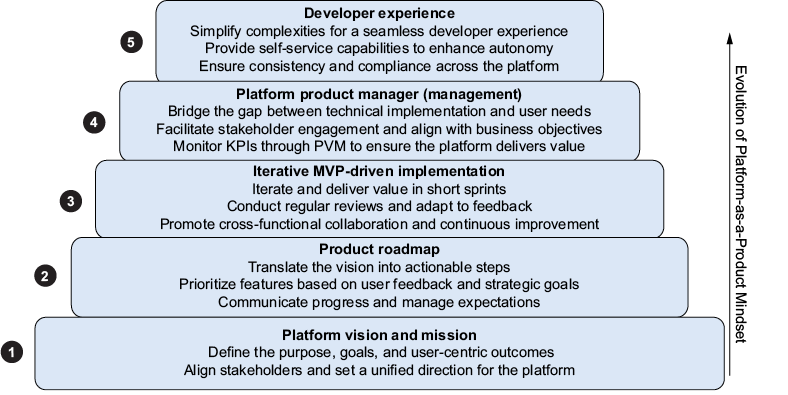
Use the lifecycle visualization to connect research findings with platform vision, roadmap decisions, prototypes, feedback, and operational delivery. section 10.2.5




