A risk rating represents assessed security severity or potential business impact as a score. It helps decision-makers compare exposure, prioritize improvements, and reassess changing threats. section 10.2
Use risk ratings to:
- Combine vulnerability counts, exploitation likelihood, and potential business effect into an overall risk exposure view. section 10.2
- Guide security investment toward the most consequential weaknesses and likely attack vectors. section 10.2
- Update defensive priorities as threat intelligence, exploitation methods, and real-time observations change. section 10.2 section 10.3.4
SecureShield’s adaptive scoring
SecureShield introduced adaptive risk scoring alongside anomaly detection and real-time threat intelligence. Dynamic scores supported faster response as threats evolved, while advanced threat detection rose to 90% and response time fell from 8 to 2 hours. section 10.3.4
Figure 10.2 The left side shows the advanced threat detection metric dashboard for SecureShield before implementing improvements. On the right is the metrics after implementing dynamic risk scoring with anomaly detection and real-time threat intelligence feeds.
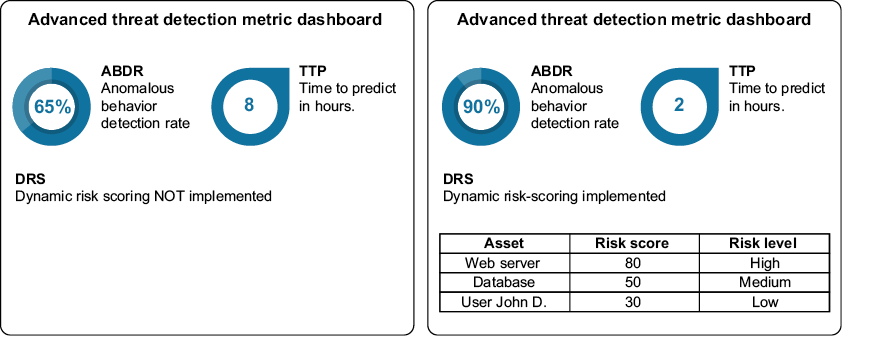
Compare the before-and-after dashboard to see how dynamic risk scoring, anomaly detection, and real-time threat intelligence changed detection and response metrics. section 10.3.4


