Role-based access control (RBAC) assigns permissions to organizational roles instead of individual users. Users receive access through role membership, so administrators can match permissions to job functions and manage access consistently. section 10.2.3 section 10.2
RBAC helps organizations manage access at scale while supporting least privilege. A role should provide the resources and actions needed for a responsibility, not every permission a person might otherwise accumulate. section 10.2 section 10.2.3
RBAC across departments
An organization might assign HR access to employee records, IT access to configurations and troubleshooting tools, and Finance access to accounting and budgeting systems. Each group is denied unrelated systems, aligning access with departmental duties. section 10.2.3
Manage RBAC with these practical considerations:
- Define roles around job functions and configure each role with the permissions required for its responsibilities. section 10.2.3
- Review role assignments when responsibilities change; failing to remove old permissions causes privilege creep. section 10.2.3
- Monitor access activity because excessive privileges can enable misuse, accidental exposure, or unauthorized access. section 10.0 section 10.5
Figure 10.1 Summary of access control models arranged by decision authority
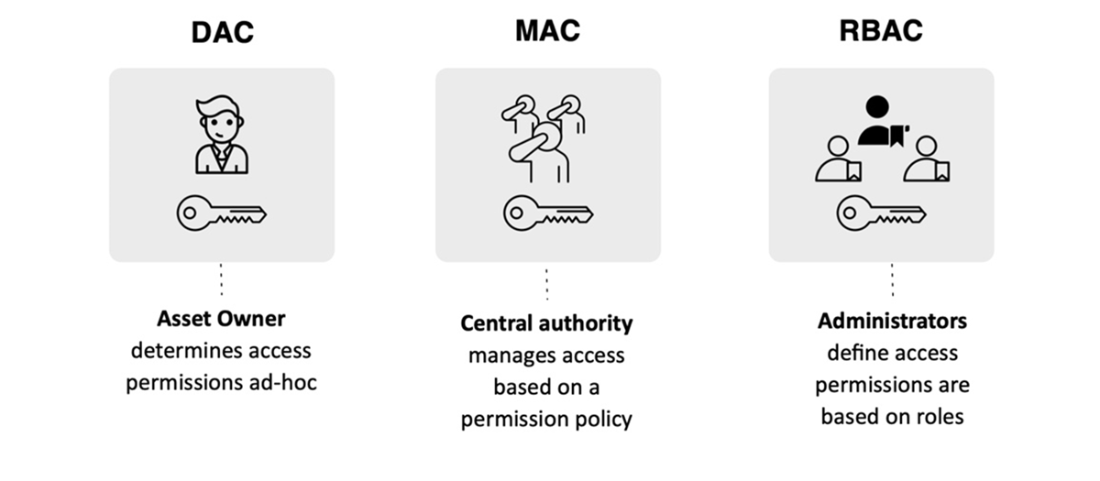
Compare RBAC with discretionary and mandatory access control by examining who makes access decisions and how permissions are enforced. section 10.2
















