A router connects two or more networks and forwards data packets according to their destination addresses. Its main job is to find a path for traffic to take. Think of a postal sorting center: it reads an address and sends a package in the right direction. section 11.12 section 11.2
A webpage request leaves the office
When you request a webpage, your computer connects through a switch or wireless access point. If the switch cannot find the destination device, it passes the message to an internal router. Using the destination IP address, that router chooses a path toward another internal router, another subnet, or an external network. The request later reaches an internet router on its way to the web server. section 11.2
Nearby devices have different primary jobs:
- A switch tries to forward a message to the correct device; a router directs it between networks. section 11.2
- A firewall checks traffic against rules to decide whether it may pass. A router primarily decides where traffic should go. section 11.2
Figure 11.1 Illustration of a request from the network of a small company traveling through the internet to the server located in the “Big company”.
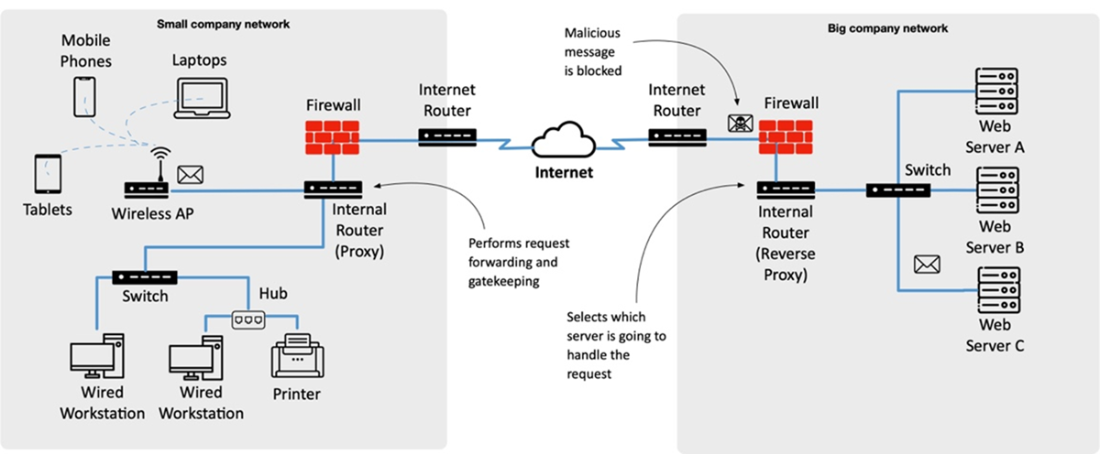
Follow the illustrated request from a small-company network across the internet to a remote server; look for where routing moves it beyond the local network. section 11.2

