liveBook · Manning

Selection bias

As explained in Deep Learning with R, Third Edition

Sampling bias is systematic distortion in measurements caused by a data-collection process that selects examples in relation to the quantity being predicted.

Selection bias, also called sampling bias, occurs when the data-collection process interacts with the quantity being predicted, producing systematically distorted measurements. A model can only learn patterns present in its training data, so predictions become unreliable when collected examples do not represent the population or future cases. section 6.1.2

The 1948 election poll

A phone survey predicted Dewey would win the US presidential election, but Truman won. Phone users were not a random sample: they were more likely to be richer, conservative, and to support Dewey. The survey therefore measured a selected population rather than the voting population. section 6.1.2

“DEWEY DEFEATS TRUMAN”: a famous example of sampling bias
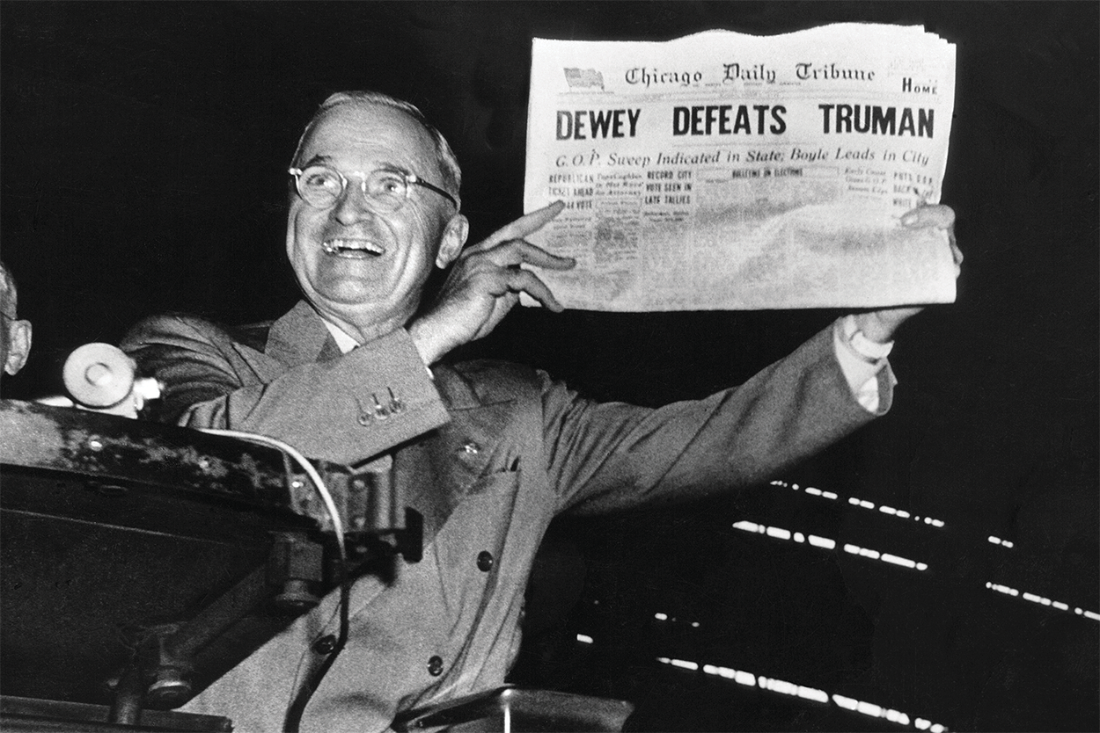
sidebar figure

Use the figure to inspect the canonical “DEWEY DEFEATS TRUMAN” example of sampling bias. section 6.1.2


How Deep Learning with R, Third Edition covers it

How deep it goes
Defines the distortion, explains its mechanism, and illustrates it historically, but stops short of detailing correction methods.
Examples
Uses the 1948 US presidential election and its unrepresentative phone survey as the central example.
What it assumes
Assumes basic ideas about data collection and prediction while explaining sampling bias from its definition and example.
What you can do after
Diagnose how a data-collection process can distort measurements and recognize when a sample is not representative.
How it connects
Connects sampling bias with data collection, nonrepresentative data, training data, prediction, and concept drift.

Also explained in

Compare how 4 books explain selection bias →

Related concepts

This explainer was generated by Manning's knowledge graph from the text of Deep Learning with R, Third Edition. The section links point to the parts of the book it draws on.

