liveBook · Manning

Stress test

As explained in Building Reliable AI Systems

Stress testing evaluates a system under unusually high loads or demanding conditions to identify weaknesses and failure modes.

Stress testing probes an LLM system under demanding or adversarial conditions to expose weaknesses that ordinary evaluation may miss. Use it alongside automated metrics and standard evaluations, not as a replacement. section 9.1.5

A practical stress-testing cycle can:

  • Test for risks such as hallucinations and bias, then analyze results and refine the system. section 9.1.5
  • Use LLMs to generate adversarial test cases, with human oversight to check their relevance and coherence. section 9.1.5

A flash-sale failure

An e-commerce support system performs well in testing, but tenfold traffic during a flash sale drives up response times and costs. Repeated questions are sent through expensive models because caching is absent. section 9.0

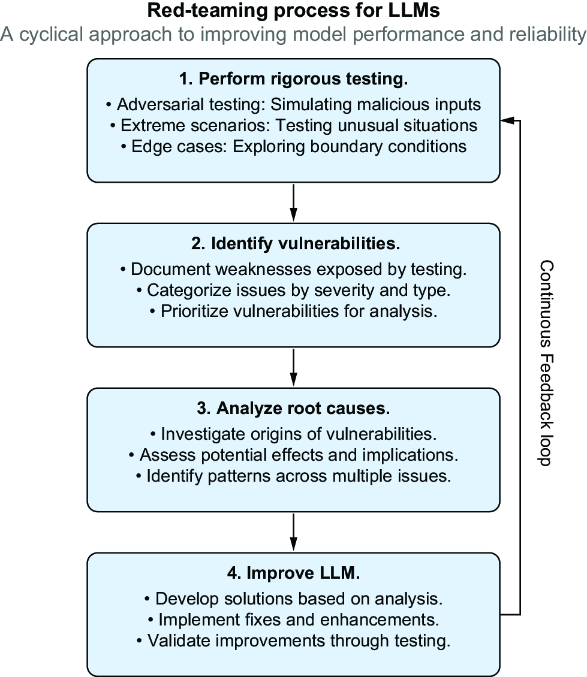
Figure 9.2 The red-teaming process for LLMs
figure

The red-teaming process diagram can help orient an iterative testing and refinement approach. section 9.1.5


How Building Reliable AI Systems covers it

How deep it goes
Describes iterative testing and refinement, but does not specify a detailed stress-testing protocol.
Examples
Uses generated adversarial test cases and a flash-sale scenario with tenfold traffic, rising costs, and missing cache.
What you can do after
Evaluate system weaknesses by combining red-teaming with standard evaluations and validating generated cases with human oversight.
How it connects
Connects red-teaming with automated metrics, standard evaluations, hallucinations, and bias.

Also explained in

Compare how 4 books explain stress test →

Related concepts

This explainer was generated by Manning's knowledge graph from the text of Building Reliable AI Systems. The section links point to the parts of the book it draws on.

