liveBook · Manning

Scorecard

As explained in Architecture Modernization: Socio-technical alignment of software, strategy, and structure

A modernization scorecard is a structured evaluation technique that scores modernization opportunities against context-specific criteria such as business value, delivery risk, and learning value.

A modernization scorecard compares opportunities against explicit criteria so teams can examine trade-offs, expose assumptions, and make better-informed portfolio decisions. The scoring process and resulting conversations are both valuable. section 16.2.2

Organize criteria around the decisions your context requires:

  • Business value: identify the new value an opportunity could create for the business. section 16.2.2
  • Delivery risks: consider the causes and consequences of failing to deliver within important timeframes. section 16.2.2
  • Discovery or learning value versus complexity: weigh the insights that support future modernization against the complexity of obtaining them. section 16.2.2

Avoid treating the scorecard as a universal rubric. Relevant criteria and their importance vary across organizations, business areas, and stages of modernization. Review scores as circumstances, dependencies, and priorities change. section 16.2.2 section 16.3.3

Workflow automation portfolio

A hypothetical workflow automation portfolio can score opportunities separately for business value, delivery risks, and discovery value versus complexity. Teams can use the results as a starting point, then negotiate quicker wins, roadmap support, or dependency-sensitive sequencing. section 16.2.2 section 16.3.3
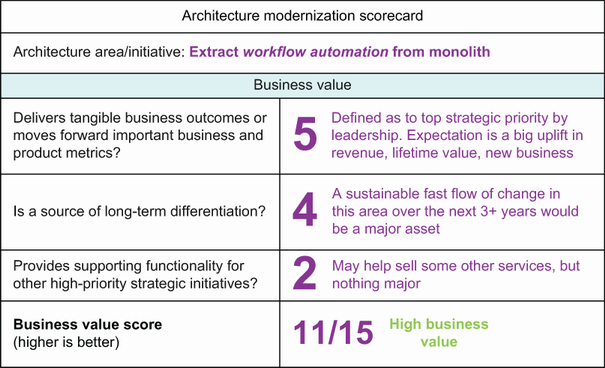
Figure 16.9 An example business value scorecard section

Use the business-value scorecard view to inspect how one evaluation dimension can compare modernization opportunities. section 16.2.2


How Architecture Modernization: Socio-technical alignment of software, strategy, and structure covers it

How deep it goes
Defines criteria, scoring, and three assessment areas, but stops short of prescribing a universal rubric.
Examples
Uses a hypothetical workflow automation scenario with business-value, delivery-risk, and learning-value-versus-complexity views.
What it assumes
Assumes identified modernization opportunities and teaches teams to select criteria from context rather than a fixed standard.
What you can do after
Evaluate modernization opportunities through contextual scoring and stakeholder conversations, then negotiate sequencing choices.
How it connects
Connects business value, delivery risk, learning value, complexity, dependencies, and modernization sequencing.

Also explained in

Compare how 3 books explain scorecard →

Related concepts

This explainer was generated by Manning's knowledge graph from the text of Architecture Modernization: Socio-technical alignment of software, strategy, and structure. The section links point to the parts of the book it draws on.
