liveBook · Manning

Sector-specific law

As explained in Data for All

A sector-specific data protection law is legislation governing personal data practices within a particular industry, data type, or use case.

How is personal data protected when one broad rule does not govern every situation? Sector-specific law targets a particular industry, data type, or use case. In the United States, protection comes from numerous federal and state laws rather than one comprehensive federal statute. section 4.7.3

Examples show how protections follow the context in which data is collected or used:

  • The Driver’s Privacy Protection Act governs personal information gathered by state motor-vehicle departments. section 4.7.3
  • COPPA addresses children under 13 online and requires privacy notices and verifiable parental consent. section 4.7.3
  • VPPA, cable-privacy provisions, GLBA, and FCRA protect audiovisual records, subscriber information, financial data, and credit-related information. section 4.7.3
Figure 4.10 US state privacy law comparison43
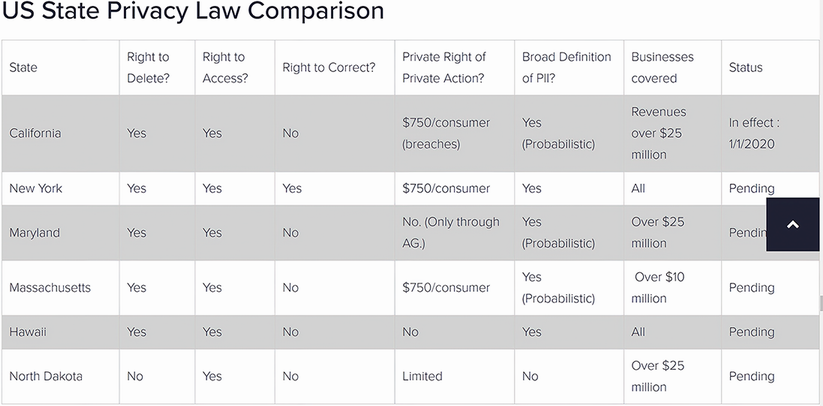
Compare how US states add privacy protections alongside federal, sector-focused rules. section 4.7.3


How Data for All covers it

How deep it goes
Defines the fragmented approach and names representative statutes without analyzing their detailed provisions.
Examples
Uses DPPA, COPPA, VPPA, Cable Communications Policy Act, GLBA, FCRA, and FACTA as examples.
What you can do after
Evaluate which industry- or data-specific privacy law may apply to a US data practice.
How it connects
Connects data protection with personal data, privacy, federal law, state law, financial services, health information, and children’s data.

Also explained in

Compare how 2 books explain sector-specific law →

Related concepts

This explainer was generated by Manning's knowledge graph from the text of Data for All. The section links point to the parts of the book it draws on.