A security scanner automates checks for vulnerabilities and security weaknesses in generated changes. In AI-first teams, SAST and linting run on every change, while broader security scanning runs regularly to catch vulnerabilities. section 8.8.4
The key engineering distinction is authority. Deterministic scanners can safely block a change when their checks are precise; probabilistic model reviewers should advise rather than control the gate. section 5.3.2
Use scanners as layered controls:
- Run linting and SAST continuously to catch known antipatterns and security issues. section 8.8.4
- Run broader security scanning weekly or per sprint to identify vulnerabilities that routine checks miss. section 8.8.4
- Keep deterministic secret scanning in the blocking path; let AI review security considerations and other contextual concerns without blocking commits. section 5.3.2
Pre-commit security gate
A Git pre-commit hook runs gitleaks against staged changes and aborts when secrets are detected. An AI reviewer then evaluates the diff for security considerations and reports structured concerns without blocking the commit. section 5.3.2
Figure 8.4 Modern LLM verification stack.
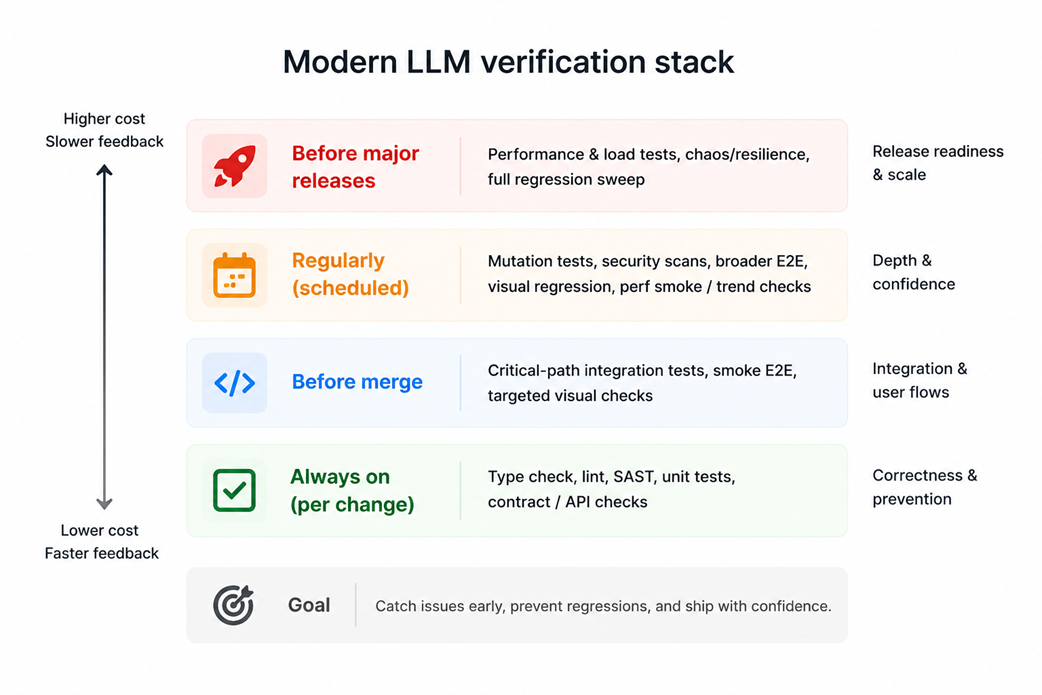
Use the verification-stack diagram to place security scanning alongside type checking, tests, review, and release validation. section 8.8.4


