Separation of concerns keeps distinct responsibilities or decision criteria independently managed. In note-taking, that means giving each idea its own note instead of stuffing every interesting thought into one oversized container. section 2.4.2
The payoff is clarity. Separate notes can still connect through links, while each remains focused enough to retrieve, revise, combine, or discard. Mixing capture and selection into one step blurs the filters and weakens the learning benefit of writing things down. section 2.5.1 section 2.4.2
One idea per note
Imagine a note titled “The Creative Programmer” containing quotations, workflow advice, research findings, and half-formed project ideas. Treating these as separate entities makes the system more useful: each thought can be written in your own words, linked to related thoughts, and later assembled into something publishable. section 2.4.2
Apply the pattern as a small design habit:
- Give each distinct idea or responsibility its own unit. section 2.4.2
- Link related units instead of merging them into a single catch-all container. section 2.4.2
- Keep capture, filtering, and publishing as distinguishable stages; combining them can blur decisions and reduce learning. section 2.5.1
Figure 2.6 An example of the linking capabilities of Luhmann’s method. Zettel 1,5A2b, as seen in https://niklas-luhmann-archiv.de/bestand/zettelkasten/zettel/ZK_1_NB_1-5A2b_V.
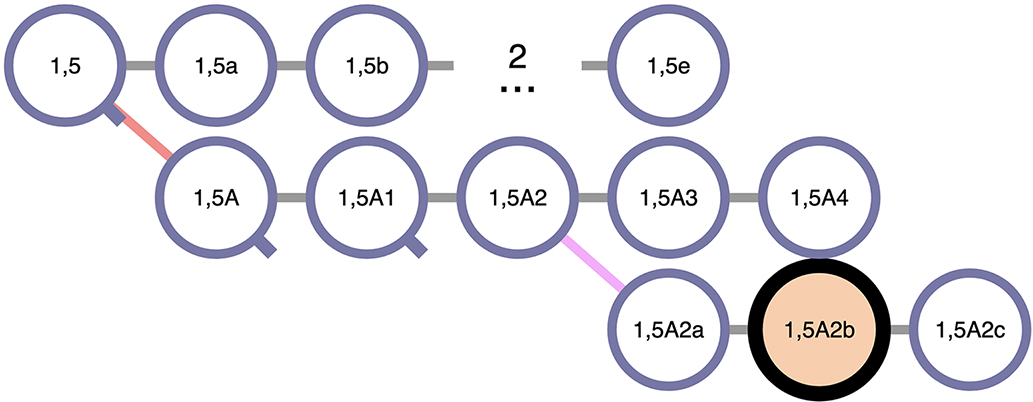
A linked Zettelkasten example makes the pattern visible: focused units remain separate while their relationships support navigation and recombination. section 2.4.2





















