liveBook · Manning

Sequential processing

As explained in AI Agents in Action

Sequential execution is the performance of actions or tasks one after another in a specified order.

Sequential processing executes actions or tasks one after another in a specified order. In agent systems, each task can use the result of the preceding task before the next agent acts. section 4.4 section 11.6

A practical sequential workflow typically follows these steps:

  • Define a multistep goal and divide it into ordered tasks. section 11.6
  • Assign each task to an agent with a specific role and expected output. section 4.5
  • Run the tasks in order, optionally reviewing or correcting later steps with feedback. section 4.5 section 11.6

A coding crew

A CrewAI crew can assign a senior engineer to write a Python game, a QA engineer to inspect syntax, logic, imports, declarations, brackets, and security, and a chief QA engineer to evaluate the result. Setting process=Process.sequential and calling crew.kickoff() runs these tasks in order. A snake game provides a concrete test case. section 4.5

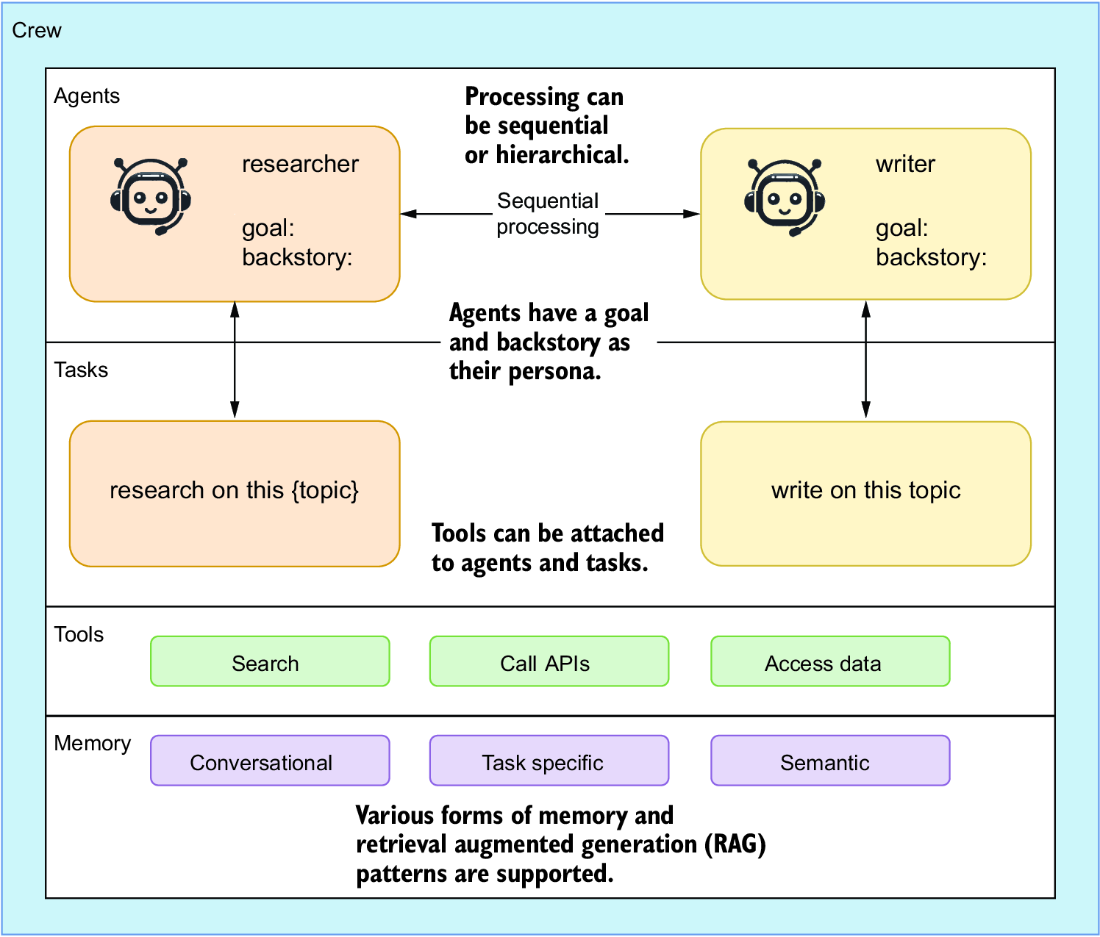
Figure 4.10 The composition of a CrewAI system
figure

Shows how agents and their associated tasks connect in a sequential CrewAI system. section 4.4

How AI Agents in Action covers it

How deep it goes
Defines ordered execution, demonstrates CrewAI configuration, and exercises feedback and parallel comparisons without detailing execution internals.
Examples
Uses CrewAI coding crews, snake games, Wikipedia retrieval, file saving, and multistep data gathering.
What it assumes
Starts with basic goal decomposition and task execution, while requiring no advanced agent-system background.
What you can do after
Build sequential planning agents, configure CrewAI task order, and compare sequential behavior with parallel execution.
How it connects
Connects multi-agent systems, task planning, feedback mechanisms, parallel processing, and hierarchical processing.

Also explained in

Compare how 7 books explain sequential processing →

Related concepts

This explainer was generated by Manning's knowledge graph from the text of AI Agents in Action. The section links point to the parts of the book it draws on.





