liveBook · Manning

Server-side rendering

As explained in Rust Servers, Services, and Apps

Server-side rendering is a web application pattern in which a server generates a fully rendered web page and sends it to a browser.

Server-side rendering (SSR) generates a complete web page on the server and sends it to the browser. The server combines a template with data to create pages containing static and dynamic content. section 7.1

In a Rust web app, Actix Web handlers can use Tera templates to build dynamic pages for HTTP responses. Forms submit input to routes; handlers process it and return pages, while template control flow can display data-backed lists. section 7.8

Static and dynamic pages

A bank homepage can be the same for every visitor, while an account page shows a customer’s balances and statements. An EzyTutors storefront could render tutor course lists and details. section 7.1 section 1.3.1
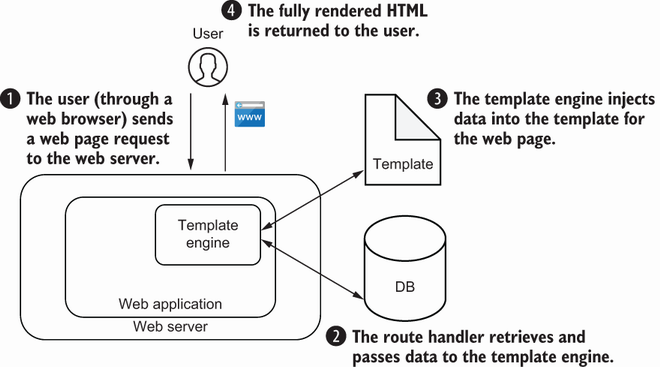
Figure 7.1 Server-side rendering of web pages

Follow the components involved in rendering a server-generated page. section 7.1

How Rust Servers, Services, and Apps covers it

How deep it goes
Traces templates, handlers, forms, and rendered responses; leaves SPA development for later and excludes PWAs.
Examples
Uses bank home and account pages, plus tutor course listings and details, to illustrate static and dynamic content.
What you can do after
Apply Actix Web and Tera to render dynamic pages, process form submissions, and display data-backed lists.
How it connects
Connects SSR to template engines, Actix Web, Tera, HTML forms, and backend web services.

Also explained in

Compare how 8 books explain server-side rendering →

Related concepts

This explainer was generated by Manning's knowledge graph from the text of Rust Servers, Services, and Apps. The section links point to the parts of the book it draws on.






