liveBook · Manning

Service layer

As explained in Fundamentals of Cybersecurity

The application layer is the highest layer of the OSI model, where network services expose functionality directly to applications and inspect application-specific content.

The application layer is Layer 7, the top layer of the OSI model. It is where network services for applications are considered. section 11.6

Because application-layer tools can inspect service content and behavior, they can make decisions based on what users do—not just raw network data. Email and web filters use this visibility to reduce threats and enforce organizational policies. section 12.5.3

Examples of application-layer filtering include:

  • Email filters check headers, links, and attachments; they can block or quarantine messages containing links to known phishing sites. section 12.5.3
  • Web filters can block malicious sites, restrict non-work platforms, or limit access to tools that could expose sensitive data. section 12.5.3
Figure 11.9 A side-by-side illustration of the layers of the OSI and TCP/IP network stack models
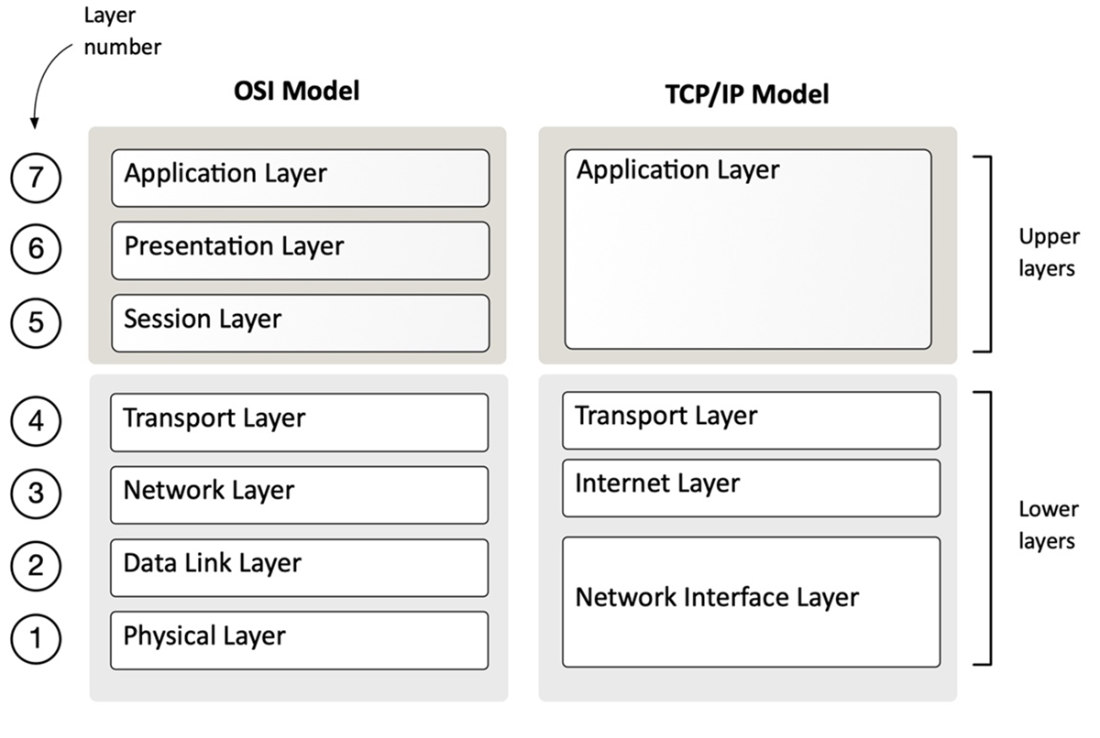
Compare the OSI and TCP/IP models to see where the application layer sits in relation to the other layers. section 11.6


How Fundamentals of Cybersecurity covers it

How deep it goes
Explains Layer 7 positioning and content-aware filtering, with examples involving email messages and web access.
Examples
Uses email headers, phishing links, attachments, malicious websites, and restrictions on non-work platforms as examples.
What you can do after
Understand how application-layer inspection supports email and web filtering decisions.
How it connects
Connects the OSI and TCP/IP models with email filtering, web application filtering, and WAF firewalls.

Also explained in

Compare how 5 books explain service layer →

Related concepts

This explainer was generated by Manning's knowledge graph from the text of Fundamentals of Cybersecurity. The section links point to the parts of the book it draws on.


