Single sign-on (SSO) lets one account provider authenticate a user for multiple services, reducing the need to remember or reuse many passwords. section 11.2.1 section 11.4
Common SSO approaches include:
- SAML 2.0, an XML-based protocol still widely used in enterprise settings. section 11.2.1
- OpenID Connect (OIDC), an OAuth 2.0 extension using JSON and common in web and mobile applications. section 11.2.1
- Treat OAuth-based implementations carefully: follow the standards and recommended best practices. section 11.2.1
Connect without another password
A user signs in to Facebook or Google, then connects to Airbnb without creating or remembering a separate Airbnb password. section 11.2.1
Figure 11.3 An example of single sign-on (SSO) on the web. By having an account on Facebook or Google, a user can connect to new services (in this example, Airbnb) without having to think about a new password.
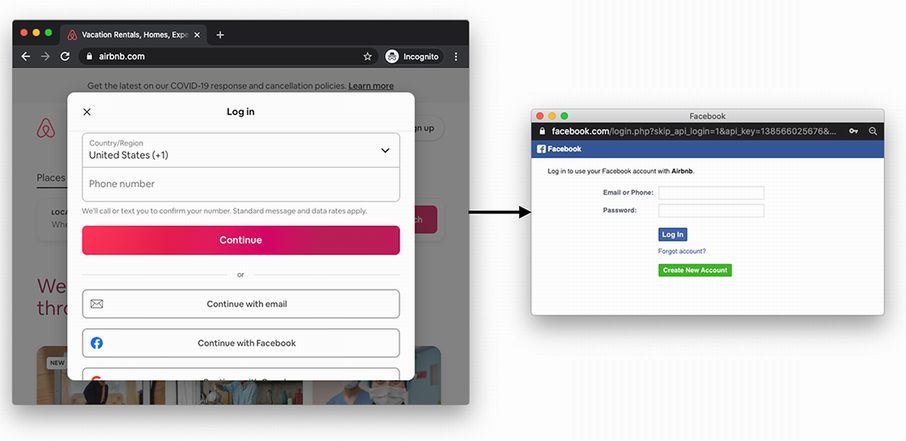
Use the web sign-in flow to see how an existing Facebook or Google account can authenticate access to another service. section 11.2.1


