SNMPv2c, or community-based SNMPv2, extends SNMPv1 message support while retaining shared community strings as its access-control mechanism. It adds GetBulk and Inform messages but provides no encryption. section 6.3
SNMPv2c uses two community permissions:
- Read-only (RO) permits Get, GetNext, and GetBulk requests but rejects Set requests. section 6.3.1
- Read-write (RW) permits both reading with Get-family requests and modifying values with Set. section 6.3.1
- An ACL can restrict which NMS sources may use each community string. section 6.3.1
Cisco IOS configuration
R1(config)# snmp-server community password123 RO R1(config)# snmp-server community password456 RW R1(config)# snmp-server enable traps R1(config)# snmp-server host 192.168.1.10 version 2c password789 The first two commands configure read-only and read-write communities. The remaining commands enable traps and identify the NMS receiving SNMPv2c traps or informs.
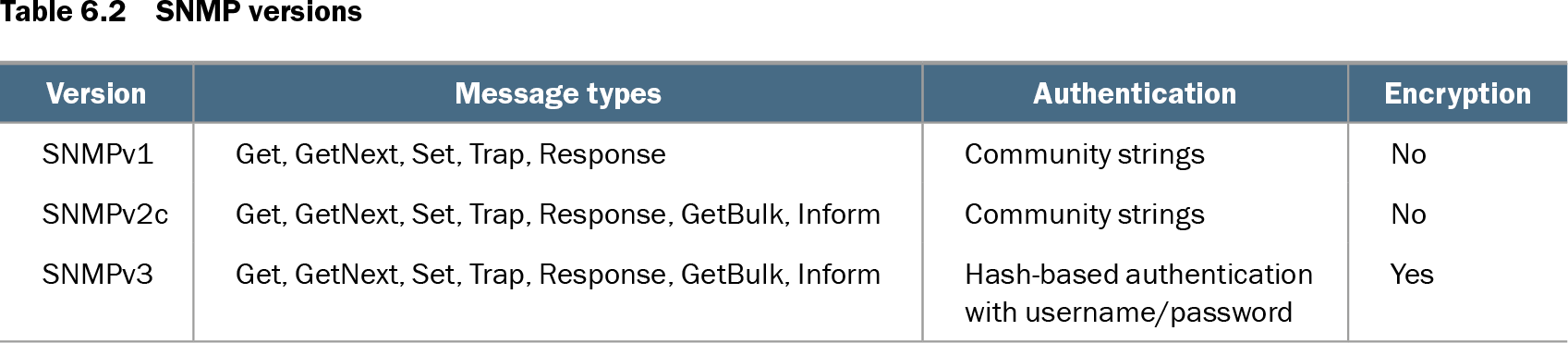
Table 6.2 SNMP versions (view table figure)
| Version |
Message types |
Authentication |
Encryption |
|---|---|---|---|
| SNMPv1 |
Get, GetNext, Set, Trap, Response |
Community strings |
No |
| SNMPv2c |
Get, GetNext, Set, Trap, Response, GetBulk, Inform |
Community strings |
No |
| SNMPv3 |
Get, GetNext, Set, Trap, Response, GetBulk, Inform |
Hash-based authentication with username/password |
Yes |
Compare SNMPv1, SNMPv2c, and SNMPv3 by message types, authentication, and encryption. section 6.3