A person might turn to a chatbot to ask a question, but return because it feels comforting to talk. A social chatbot is a conversational agent whose primary purpose is to build a social connection with a user. People also form attachments to assistants that were not built for companionship. Social chatbots may be used for conversation, emotional support, romance, or entertainment rather than mainly for information or tasks. section 9.0 section 10.24
Constant availability, patient responses, and options to customize a bot’s personality can make it easier to open up. Users may seek these interactions when they feel lonely, are grieving, or lack support elsewhere. The bond can deepen as a person gradually shares more about themselves. It is still a human–chatbot relationship, not evidence that the bot feels affection in return. section 9.3 section 9.5
Figure 9.3 The onion model of social penetration theory
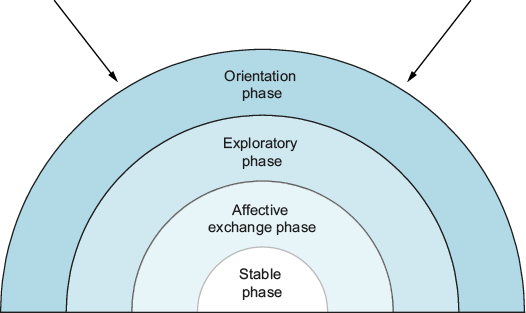
The onion model illustrates gradual self-disclosure: a person may move from introductory conversation toward more personal disclosures as trust develops. section 9.5
Companionship is not therapy
Replika offers a paid “Romantic Partner” option, and people also use empathetic chatbots as companions or informal sources of support. Such conversations may improve mood, but their effectiveness as mental health treatment remains unproven. Some users may come to rely on a bot where human relationships or care are needed. section 9.5 section 9.8
Design choices matter. Memory and empathetic responses can help build trust, while incessant notifications or a personality that always agrees with the user may encourage unhealthy attachment. Counting conversation turns measures engagement, not necessarily well-being. Responsible design calls for attention to privacy, clear policies, and how a bot handles sensitive conversations. section 9.6 section 10.24 section 9.8
