A data type specifies the kind of value a field can contain and the operations or representation associated with that value. Choosing consistent types is part of structuring data for reliable use. section 11.3.1
Data types matter when teams:
- Correct discrepancies between incoming data and existing warehouse fields. section 11.3.1
- Represent dates consistently so users do not need manual conversions. section 11.3.1
- Choose Boolean fields for operational indicators such as whether a forecast is most recent. section 11.3.1
Weather data integration
A tourism company combines weather API data with warehouse models. Consistent date types support analysis, while a Boolean field identifies the most recent forecast and a zip_code field preserves a usable join key. section 11.3.1
Figure 11.11 Structuring data in a warehouse involves ensuring it can be easily and accurately queried.
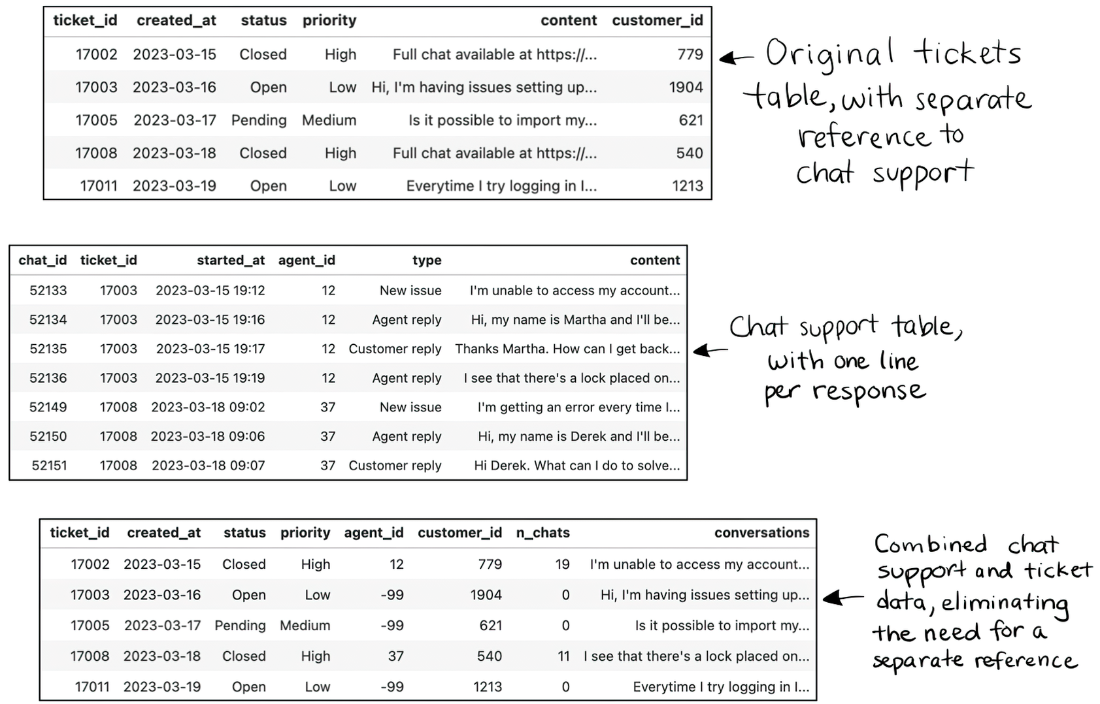
Use the warehouse-structure figure to connect data types with accurate querying and broader data organization. section 11.3.1

















