Stratum measures an NTP server’s distance from a reference clock in the synchronization hierarchy. Lower values indicate closer synchronization, so clients prefer lower-stratum sources. section 2.2
Read the hierarchy from the reference clock outward:
- Stratum 0 consists of reference clocks such as atomic or GPS clocks. section 2.2
- Stratum 1 servers synchronize directly with reference clocks and are primary servers. section 2.2
- Stratum 2 servers learn time from stratum 1; each successive server normally increases the stratum by one. section 2.2
- Stratum 16 identifies an unreliable time source; devices do not synchronize to it. The highest usable stratum is 15. section 2.2
A device can operate as both an NTP client and server. For example, a stratum 2 router can serve stratum 3 clients. The device’s stratum reflects its selected time source, not physical distance. section 2.2 section 2.3.2
Verifying inherited stratum on Cisco IOS
After R1 synchronizes with a stratum 1 server, show ntp status reports “Clock is synchronized, stratum 2.” R2, synchronized to R1 at stratum 2, reports stratum 3. In show ntp associations, the st column displays each time source’s stratum. section 2.3.1 section 2.3.2
Figure 2.2 The NTP hierarchy. Reference clocks (stratum 0) are high-precision timekeeping devices such as atomic clocks. Stratum 1 NTP servers connect directly and sync to reference clocks. Stratum 2 NTP servers sync to stratum 1 NTP servers. Servers can peer with devices at the same stratum.
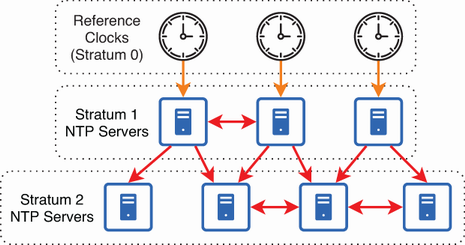
Trace stratum 0 reference clocks through stratum 1 and stratum 2 servers, including same-stratum peering. section 2.2
