liveBook · Manning

Stream-aligned team

As explained in Architecture Modernization: Socio-technical alignment of software, strategy, and structure

A stream-aligned team is a team organized to deliver value along a specific flow of work, such as an independent value stream.

A stream-aligned team owns an independent flow of value, from discovering unmet user needs in a business subdomain through building, deploying, and running the product capability. It combines business and IT responsibilities rather than acting as an IT function separated from the business. section 11.2.1 section 6.1.1

An effective stream-aligned team typically has:

  • A loosely coupled business subdomain or product area to align with. section 6.1.1
  • Purposeful business outcomes that guide its decisions. section 6.1.1
  • The skills needed across the stream, such as product management, testing, and user experience. section 11.2.1
  • Authority to change and deploy decoupled software with minimal dependencies on teams outside it. section 6.1.1

Typical team boundaries

Examples include a team responsible for domain APIs, a team building embedded hardware software, a mobile or web team, and a full-stack team owning the backend API and user interface for an end-to-end search feature. section 11.2.1 section 6.1.1
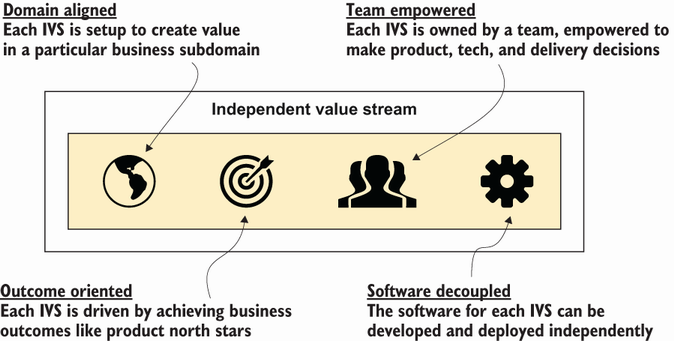
Figure 6.2 The four key characteristics of an independent value stream

Use the model of the four key characteristics of an independent value stream to assess alignment, outcomes, autonomy, and architectural decoupling. section 6.1.1


How Architecture Modernization: Socio-technical alignment of software, strategy, and structure covers it

How deep it goes
Defines responsibilities, skills, autonomy, and architectural conditions, while deferring detailed implementation practices.
Examples
Uses domain APIs, embedded software, mobile applications, web applications, search features, price services, and search services.
What it assumes
Assumes a recognizable business subdomain or product area and teaches cross-functional ownership across discovery, delivery, and operation.
What you can do after
Operate and evolve a product capability while pursuing a business outcome with fewer dependencies on external teams.
How it connects
Connects value streams with business subdomains, business outcomes, autonomous teams, decoupled software architecture, and platform groupings.

Also explained in

Compare how 2 books explain stream-aligned team →

Related concepts

This explainer was generated by Manning's knowledge graph from the text of Architecture Modernization: Socio-technical alignment of software, strategy, and structure. The section links point to the parts of the book it draws on.