System 1 is fast, automatic, intuitive thinking that operates with little effort. It draws conclusions through mental shortcuts shaped by experience and repetition, helping people navigate continuous information efficiently. section 7.1.3
System 1 appears in familiar activities that become routine:
- Driving for a long time on an empty road. section 7.1.3
- Solving 1 + 1 or detecting emotion in a voice or facial expression. section 7.1.3
- Handling driving decisions automatically after years of repetition. section 7.1.3
System 1 is valuable but sensitive to cognitive bias. Anchoring, availability bias, functional fixedness, and the bandwagon effect can shape collaborative modeling and group decisions. System 2 provides slower, more conscious reasoning that can challenge System 1 when the cost of error is high; effective facilitation balances both rather than treating bias as inherently irrational. section 7.1.2 section 7.1.4
Reviewing a collaborative session
After a meeting or modeling session, look for anchoring, availability bias, functional fixedness, or the bandwagon effect. Compare your recollection with other participants’ observations to expose conclusions that may have formed automatically. section 7.1.2
Figure 7.1 Sensemaking exercise to demonstrate cognitive bias during collaborative modeling
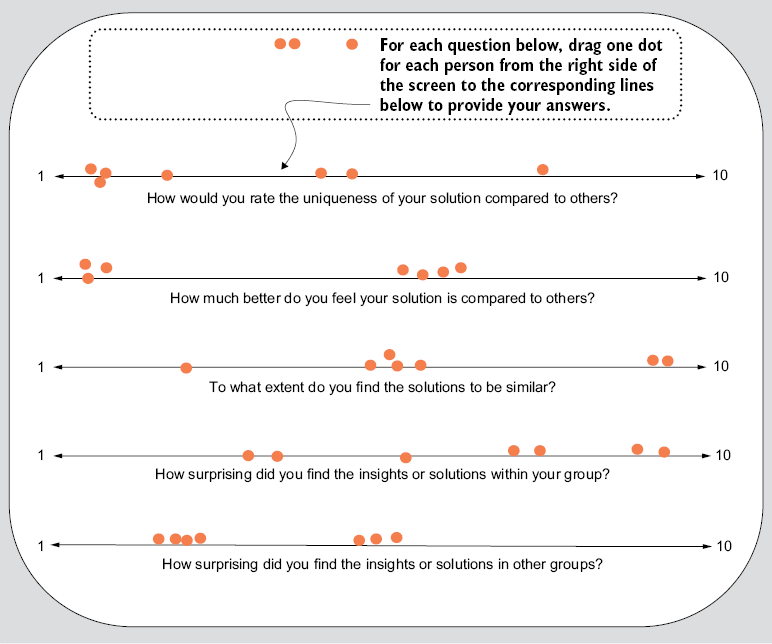
Use the sensemaking exercise to examine how cognitive bias can arise during collaborative modeling. section 7.1.2
