Targeted advertising delivers promotional messages to selected audiences using information about their characteristics, behavior, or immediate circumstances. A company may combine activity, relationships, and broader social or economic data to predict what you might do next, then present an offer designed to influence that moment. section 2.5
The arrangement can feel like a free exchange: you use a service, while the company uses data created through that use. Search helped normalize this model, and advertising became central to major technology platforms. Narrow targeting is therefore not a side activity; it can support most of a platform’s revenue. section 1.3.3 section 4.6
The central questions concern whose interests targeting serves:
- Companies may tailor messages to vulnerability rather than need, encouraging purchases when a person should reduce debt or meet another priority. section 2.5
- Individual data may be treated as a resource to process, control, reuse, or resell, raising questions about consent and benefit. section 1.5.1
- Changing the system may require personal choices alongside government action, watchdog scrutiny, and investment in alternative business models. section 4.6
A tailored offer
Suppose data suggests that you are facing a particular financial or household situation. A company can model that situation and send an offer for groceries, clothing, gifts, or a car. The message may fit your circumstances while primarily advancing the company’s sales goals. section 2.5
Figure 1.1 Global search engine market share. Source: Reliablesoft (https://www.reliablesoft.net/top-10-search-engines-in-the-world/)
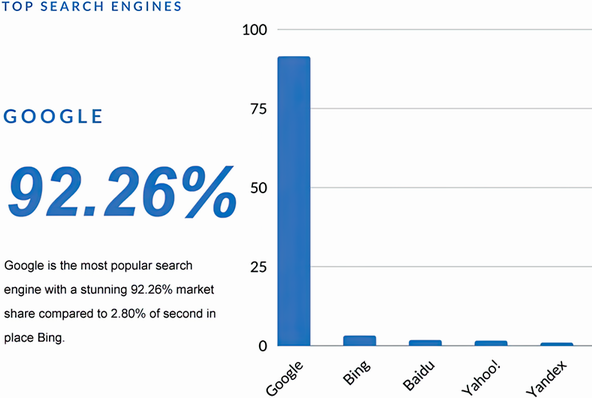
Use the search-engine market-share figure to place Google’s advertising model within the reach of a dominant search service. section 1.3.3
